
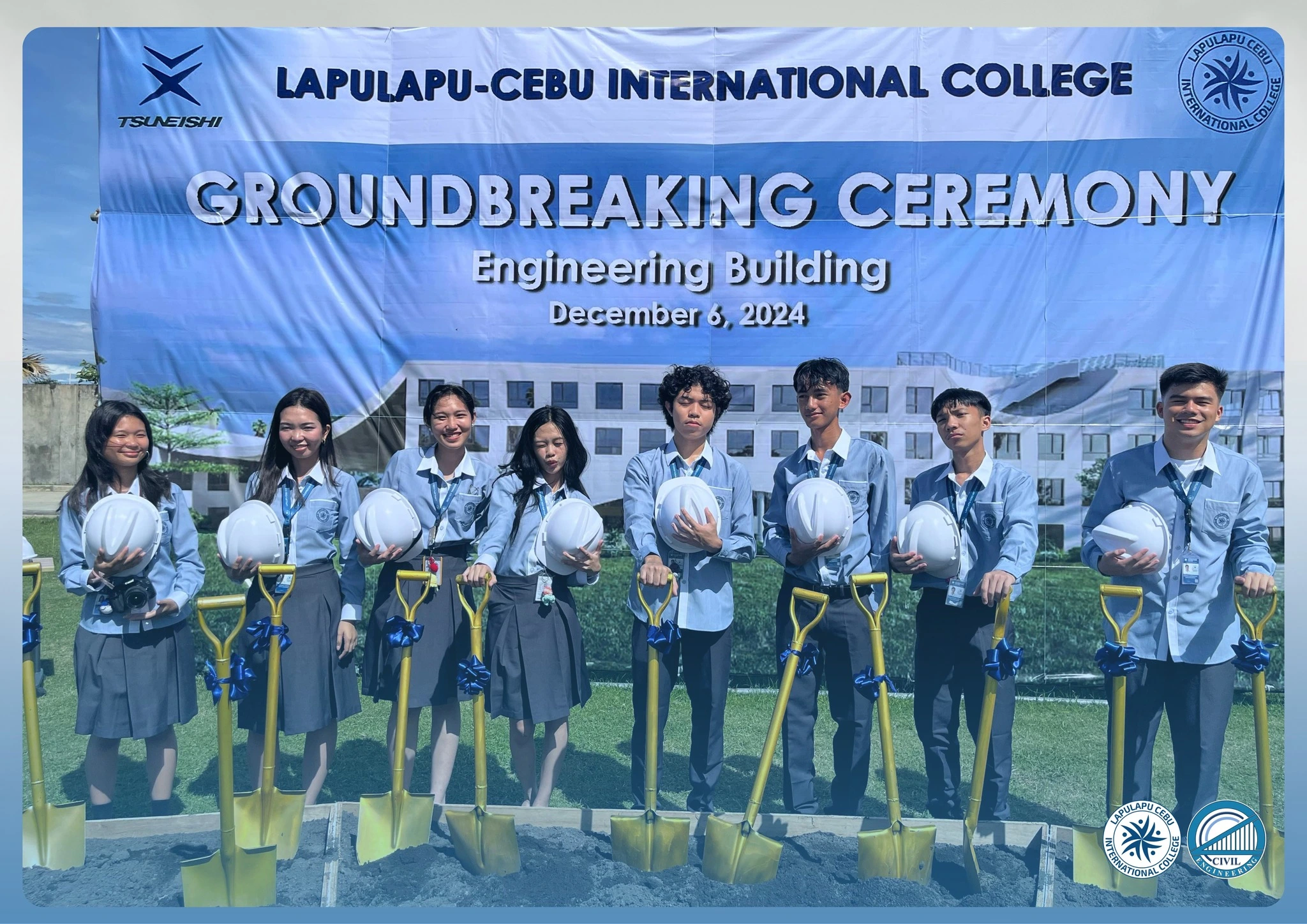
Civil Engineering
In addition to conscious motivation, the Bachelor of Science in Civil Engineering program requires good knowledge of basic calculus and sciences— both natural and physical—so that students, along with the outcomes-based method of teaching and learning, can wade through the streams of higher mathematics and core courses that serve as foundation in gaining the ability.
Program Overview
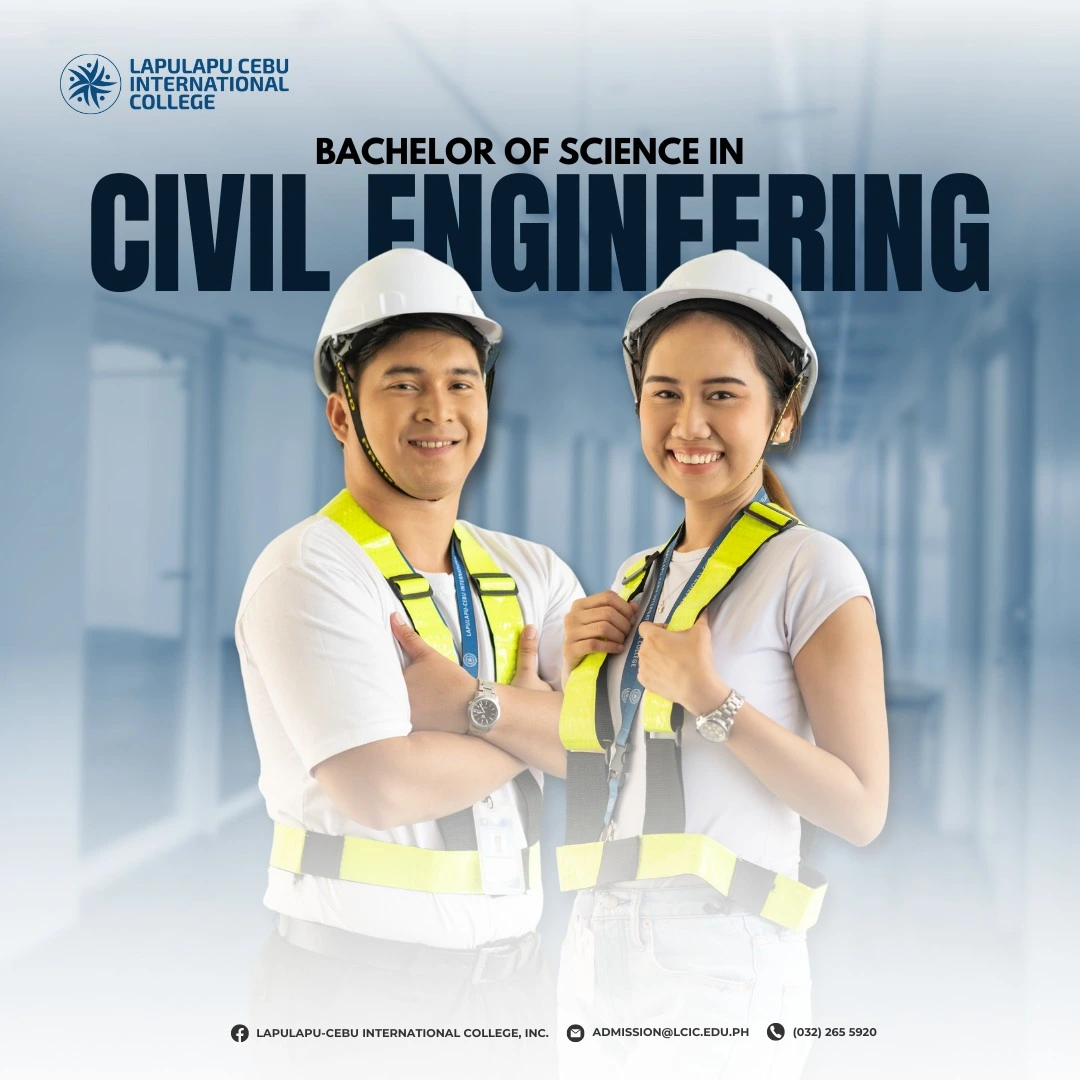
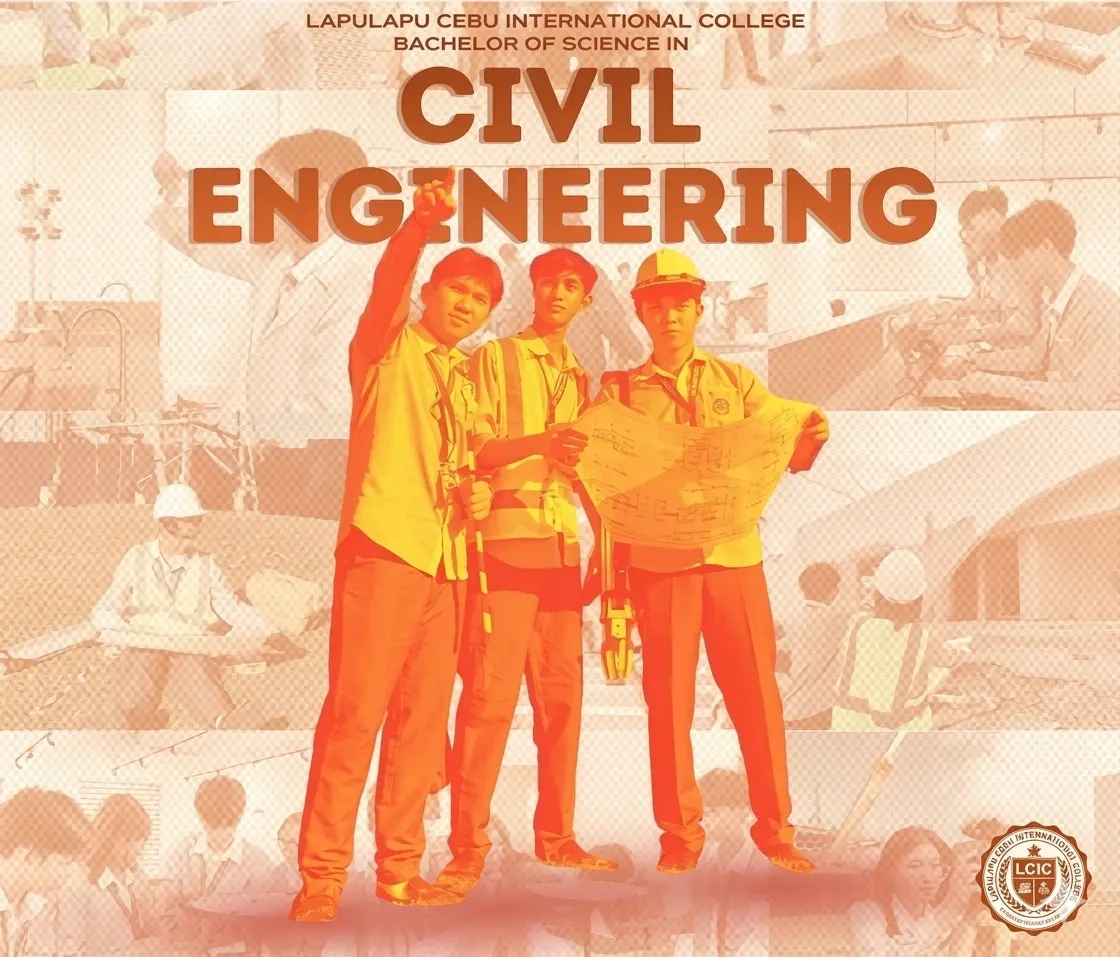
The Bachelor of Science in Civil Engineering (CE) Program is a comprehensive four- year program designed to equip students with a deep foundation in mathematics and physical sciences. It applies these fundamental principles, alongside modern computational tools, to solve the complex technical problems associated with developing and sustaining civilized life. The program trains aspiring engineers on planning, designing, construction and maintenance of infrastructure projects, from buildings and bridges to water systems and transportation networks. Ultimately, the program produces productive and ethical graduates who are ready to contribute to nation-building through careers in industry practice, research, and the academe.
Program Educational Objectives (PEOs)
Within five (5) years after graduation, the graduates of the BS Civil Engineering Program are expected to:
PEO 1
Practice civil engineering through the analysis, design, assessment, and management of structural systems, geotechnical and foundation works, and construction projects, ensuring safety, resilience, efficiency, and cost- effectiveness in compliance with engineering codes, standards, and industry best practices
PEO 2
Demonstrate leadership and teamwork skills by working effectively in multidisciplinary and multicultural environments to achieve shared engineering goals at the local and global levels.
PEO 3
Contribute to nation-building by upholding moral, legal, and professional ethics in the practice of civil engineering.
PEO 4
Engage in lifelong learning and continuous professional development to remain responsive to emerging technologies, industry trends, and societal needs in the field of civil engineering.
Program Outcomes (POs)
- A. Apply knowledge of mathematics and science to solve complex civil engineering problems.
- B. Design and conduct experiments, as well as to analyze and interpret data.
- C. design a system, component, or process to meet desired needs within realistic constraints, in accordance with standards;
- D. function in multidisciplinary and multi-cultural teams;
- E. identify, formulate, and solve complex civil engineering problems;
- F. understand professional and ethical responsibility;
- G. communicate effectively civil engineering activities with the engineering community and with society at large;
- H. understand the impact of civil engineering solutions in a global, economic, environmental, and societal context;
- I. recognize the need for, and engage in life-long learning;
- J. know contemporary issues;
- K. use techniques, skills, and modern engineering tools necessary for civil engineering practice;
- L. know and understand engineering and management principles as a member and leader of a team, and to manage projects in a multidisciplinary environment and;
- M. understand at least one specialized field of civil engineering practice.
Faculty

Engr. Renato L. Maglasang, Jr.,MSCE
Department Chair
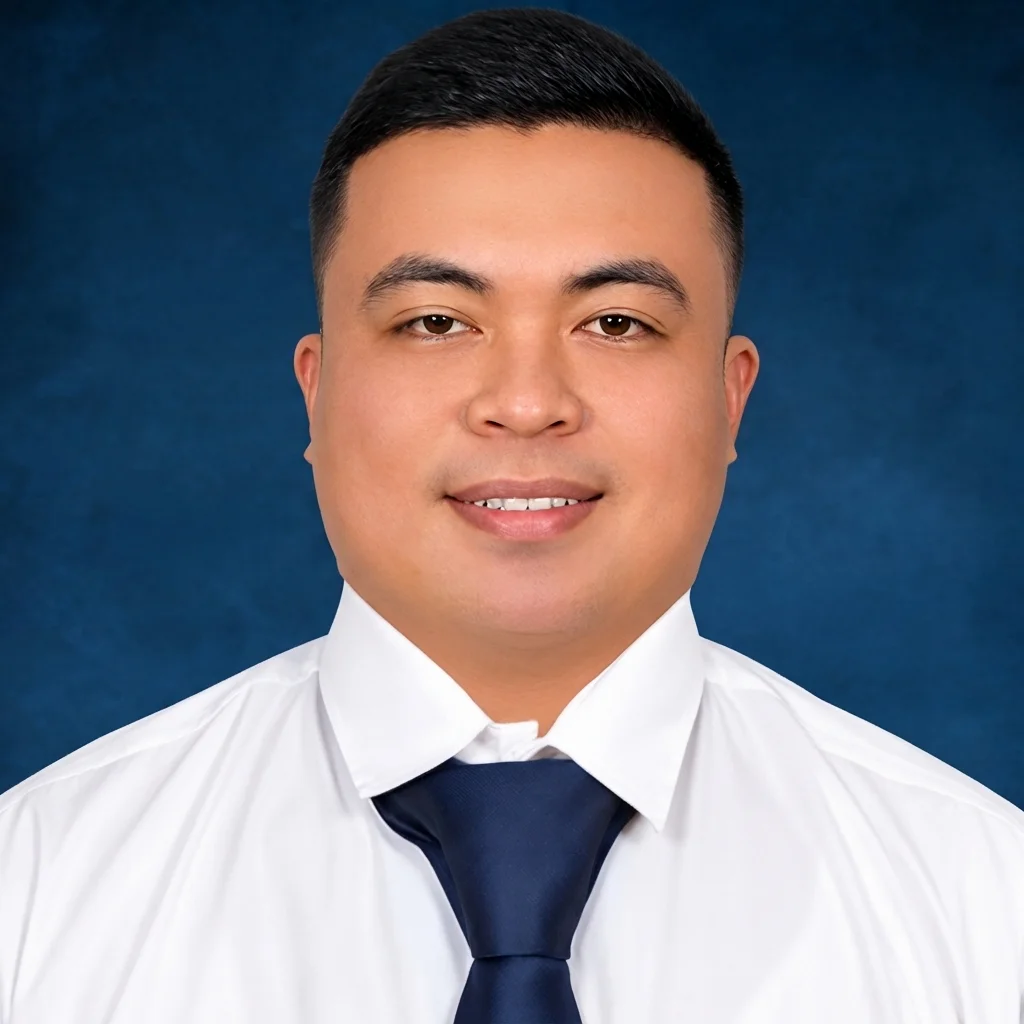
Engr. Edu S. Espina, M.Eng

Engr. Ana Rose Santillan

Engr. John Paul Caseros, RMP

Engr. Jomari Sanchez
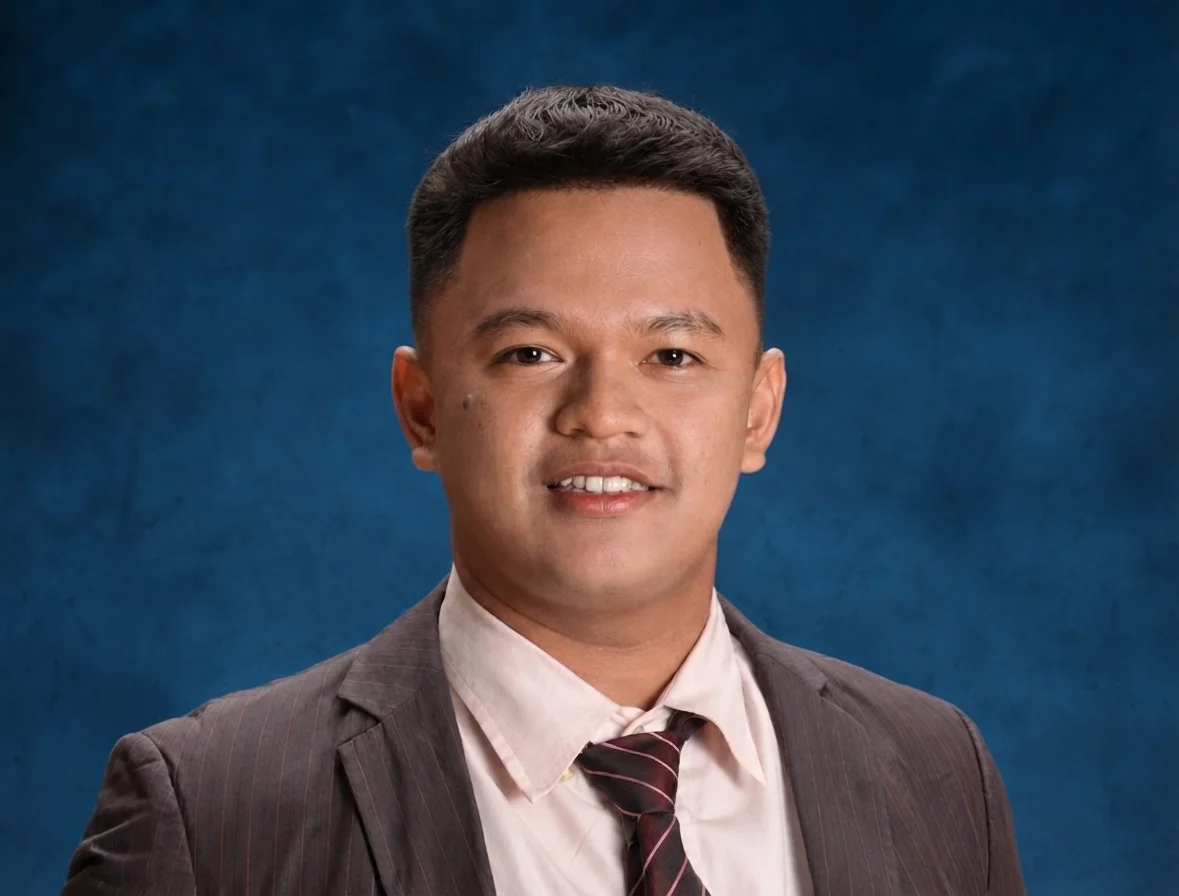
Engr. Mark Devon Laurente, RMP

Engr. John Philip Minancillio

Engr. Cristina Mauren Pajes, RMP, ME 1, PE 1
Career Opportunities
• Structural Engineer
• Design Engineer
• Quantity Surveyor
• Project Manager
• Planning Engineer
• Building Engineer
BACHELOR OF SCIENCE IN CIVIL ENGINEERING
(Major in Structural Engineering)
CMO 92, Series of 2017
Effective Academic Year
| CODE | DESCRIPTIVE TITLE | LEC | LAB | UNITS/S | PREREQUISITES | |
|---|---|---|---|---|---|---|
| 1st SEMESTER | ||||||
| GE 1 | Understanding the Self | 3 | 0 | 3 | ||
| GE 2 | Readings in Philippine History | 3 | 0 | 3 | ||
| FL 1 | Introduction to Japanese Language Studies | 3 | 0 | 3 | ||
| MATH 100 | College Mathematics | 4 | 0 | 4 | ||
| EMATH 110 | Calculus 1 | 3 | 0 | 3 | EBR 101 (for non-STEM only) | |
| CHEM 110 | Chemistry for Engineers | 3 | 1 | 4 | EBR 102 (for non-STEM only) | |
| CE 110 | Civil Engineering Orientation | 2 | 0 | 2 | ||
| CE 111 | Engineering Drawings and Plans | 0 | 1 | 1 | ||
| SHOP 110 | Masonry and Rebar Works | 0 | 2 | 2 | ||
| PE 1 | Physical Activities Towards Health and Fitness 1 (PATH-FIT 1) | 2 | 0 | 2 | ||
| NSTP 1 | National Services Training Program 1 | 3 | 0 | 3 | ||
| TOTAL | 26 | 4 | 30 | |||
| CODE | DESCRIPTIVE TITLE | LEC | LAB | UNITS/S | PREREQUISITES | |
|---|---|---|---|---|---|---|
| 2nd SEMESTER | ||||||
| GE 3 | The Contemporary World | 3 | 0 | 3 | ||
| GE 4 | Mathematics in the Modern World | 3 | 0 | 3 | ||
| EMATH 121 | Calculus 2 | 3 | 0 | 3 | EMATH 110 | |
| FL 2 | Basic Japanese 1 | 3 | 0 | 3 | FL 1 | |
| PHYS 120 | Physics for Engineers (Calculus-based) | 3 | 1 | 4 | EMATH 110 | |
| BES 120 | Computer Fundamentals and Programming | 0 | 2 | 2 | ||
| SHOP 120 | Plumbing and Electrical Works | 0 | 2 | 2 | SHOP 110 | |
| PE 2 | Physical Activities Towards Health and Fitness 2 (PATH-FIT 2) | 2 | 0 | 2 | PE 1 | |
| NSTP 2 | National Services Training Program 2 | 3 | 0 | 3 | NSTP 1 | |
| TOTAL | 20 | 5 | 25 | |||
| EBR 101 | Pre-Calculus | 3 |
| EBR 102 | General Chemistry | 3 |
| EBR 103 | General Physics | 3 |
| CODE | DESCRIPTIVE TITLE | LEC | LAB | UNITS/S | PREREQUISITES | |
|---|---|---|---|---|---|---|
| 1st SEMESTER | GE 5 | Purposive Communication | 3 | 0 | 3 | |
| GE 6 | Art Appreciation | 3 | 0 | 3 | ||
| RIZ 1 | Rizal's Life, Works, and Writings | 3 | 0 | 3 | ||
| FL 3 | Basic Japanese 2 | 3 | 0 | 3 | FL 2 | |
| EMATH 210 | Differential Equations | 3 | 0 | 3 | EMATH 121 | |
| BES 210 | Computer-Aided Drafting | 0 | 1 | 1 | BES 120 | |
| BES 211 | Engineering Economics | 3 | 0 | 3 | ||
| MECH 210 | Statics of Rigid Bodies | 3 | 0 | 3 | PHYS 120, EMATH 121 | |
| CE 210 | Fundamentals of Surveying | 3 | 1 | 4 | CE 111 | |
| PE 3 | Physical Activities Towards Health and Fitness 3 (PATH-FIT 3) | 2 | 0 | 2 | PE 2 | |
| TOTAL | 26 | 2 | 28 | |||
| CODE | DESCRIPTIVE TITLE | LEC | LAB | UNITS/S | PREREQUISITES | |
|---|---|---|---|---|---|---|
| 2nd SEMESTER | GE 7 | Science, Technology and Society | 3 | 0 | 3 | |
| GEE 1 | The Entrepreneurial Mind | 3 | 0 | 3 | ||
| FL 4 | Intermediate Japanese 1 | 3 | 0 | 3 | FL 3 | |
| EMATH 220 | Engineering Data Analysis | 3 | 0 | 3 | EMATH 121 | |
| MECH 220 | Dynamics of Rigid Bodies | 2 | 0 | 2 | MECH 210 | |
| MECH 221 | Mechanics of Deformable Bodies | 4 | 0 | 4 | MECH 210 | |
| CE 220 | Engineering Utilities 1 | 3 | 0 | 3 | PHYS 120 | |
| CE 221 | Building Systems Design | 2 | 1 | 3 | CE 111 | |
| PE 4 | Physical Activities Towards Health and Fitness 4 (PATH-FIT 4) | 2 | 0 | 2 | PE 3 | |
| TOTAL | 25 | 1 | 26 | |||
| CODE | DESCRIPTIVE TITLE | LEC | LAB | UNITS/S | PREREQUISITES | |
|---|---|---|---|---|---|---|
| 1st SEMESTER | GE 8 | Ethics | 3 | 0 | 3 | |
| GEE 2 | Great Books | 3 | 0 | 3 | ||
| EMATH 310 | Numerical Solutions to CE Problems | 2 | 1 | 3 | EMATH 210 | |
| GEOL 310 | Geology for Civil Engineers | 2 | 0 | 2 | CHEM 110 | |
| BES 310 | Engineering Management | 2 | 0 | 2 | ||
| CE 311 | Structural Theory | 3 | 1 | 4 | MECH 221 | |
| CE 312 | Construction Materials and Testing | 2 | 1 | 3 | MECH 221 | |
| CE 313 | Engineering Utilities 2 | 3 | 0 | 3 | PHYS 120 | |
| TOTAL | 20 | 3 | 23 | |||
| CODE | DESCRIPTIVE TITLE | LEC | LAB | UNITS/S | PREREQUISITES | |
|---|---|---|---|---|---|---|
| 2nd SEMESTER | GEE 3 | Living in the IT Era | 3 | 0 | 3 | |
| TECHNO 320 | Technopreneurship 101 | 3 | 0 | 3 | ||
| CE 320 | Database Management in Construction | 3 | 1 | 4 | ||
| CE 321 | Hydrology | 2 | 0 | 2 | ||
| CE 322 | Quantity Surveying | 1 | 1 | 2 | CE 311 | |
| CE 323 | Principles of Steel Design | 2 | 1 | 3 | CE 311 | |
| CE 324 | Principles of Reinforced/Pre-stressed Concrete | 3 | 1 | 4 | CE 311 | |
| CE 325 | Hydraulics | 4 | 1 | 5 | MECH 220 / MECH 221 | |
| TOTAL | 21 | 5 | 26 | |||
| CODE | DESCRIPTIVE TITLE | LEC | LAB | UNITS/S | PREREQUISITES |
|---|---|---|---|---|---|
| CE 326 | On-The-Job-Training (240 hours) | 2 | 1 | 3 | CE 322 |
| TOTAL | 2 | 1 | 3 | ||
| CODE | DESCRIPTIVE TITLE | LEC | LAB | UNITS/S | PREREQUISITES | |
|---|---|---|---|---|---|---|
| 1st SEMESTER | CE 410 | Construction Methods & Project Management | 2 | 1 | 3 | CE 322/CE 320 |
| CE 411 | Geotechnical Engineering 1 | 3 | 1 | 4 | MECH 221/GEOL 310 | |
| CE 412 | Highway and Railroad Engineering | 3 | 0 | 3 | CE 210 | |
| CE 413 | CE Project 1 | 1 | 1 | 2 | 4th YEAR STANDING | |
| CE 414 | Professional Course - Specialized 1 | 3 | 0 | 3 | CE 324 | |
| CE 415 | Professional Course - Specialized 2 | 3 | 0 | 3 | CE 323/CE 324 | |
| CE 416 | CE Laws, Ethics & Contracts | 2 | 0 | 2 | 4th YEAR STANDING | |
| TOTAL | 17 | 3 | 20 | |||
| CODE | DESCRIPTIVE TITLE | LEC | LAB | UNITS/S | PREREQUISITES | |
|---|---|---|---|---|---|---|
| 2nd SEMESTER | CE 420 | Principles of Transportation Engineering | 3 | 0 | 3 | CE 412 |
| CE 421 | CE Project 2 | 1 | 1 | 2 | CE 413 | |
| CE 422 | Professional Course - Specialized 3 | 3 | 0 | 3 | CE 311 | |
| CE 423 | Professional Course - Specialized 4 | 3 | 0 | 3 | CE 414 | |
| CE 425 | Professional Course - Specialized 5 | 3 | 1 | 4 | CE 411 | |
| CE EC 1 | Enhancement Course 1 | 0 | 1 | 1 | GRADUATING | |
| CE EC 2 | Enhancement Course 2 | 0 | 1 | 1 | GRADUATING | |
| CE EC 3 | Enhancement Course 3 | 0 | 1 | 1 | GRADUATING | |
| TOTAL | 13 | 5 | 18 | |||
| Total academic units: 199.00, Lecture Unit: 170.00, Lab Unit: 29.00 | ||||||
- Professional Course – Specialized 1: Reinforced Concrete Design
- Professional Course – Specialized 2: Civil Engineering Softwares (STAAD, Tekla, Rivet, etc.)
- Professional Course – Specialized 3: Pre-Stress Concrete
- Professional Course – Specialized 4: Earthquake Engineering
- Professional Course – Specialized 5: Foundation Engineering
- Enhancement Course 1: Applied Mathematics, Surveying, Principles of Transportation and Highway Engineering,
- Enhancement Course 2: Hydraulics and Principles of Geotechnical Engineering
- Enhancement Course 3: Principle of Structural Analysis and Design
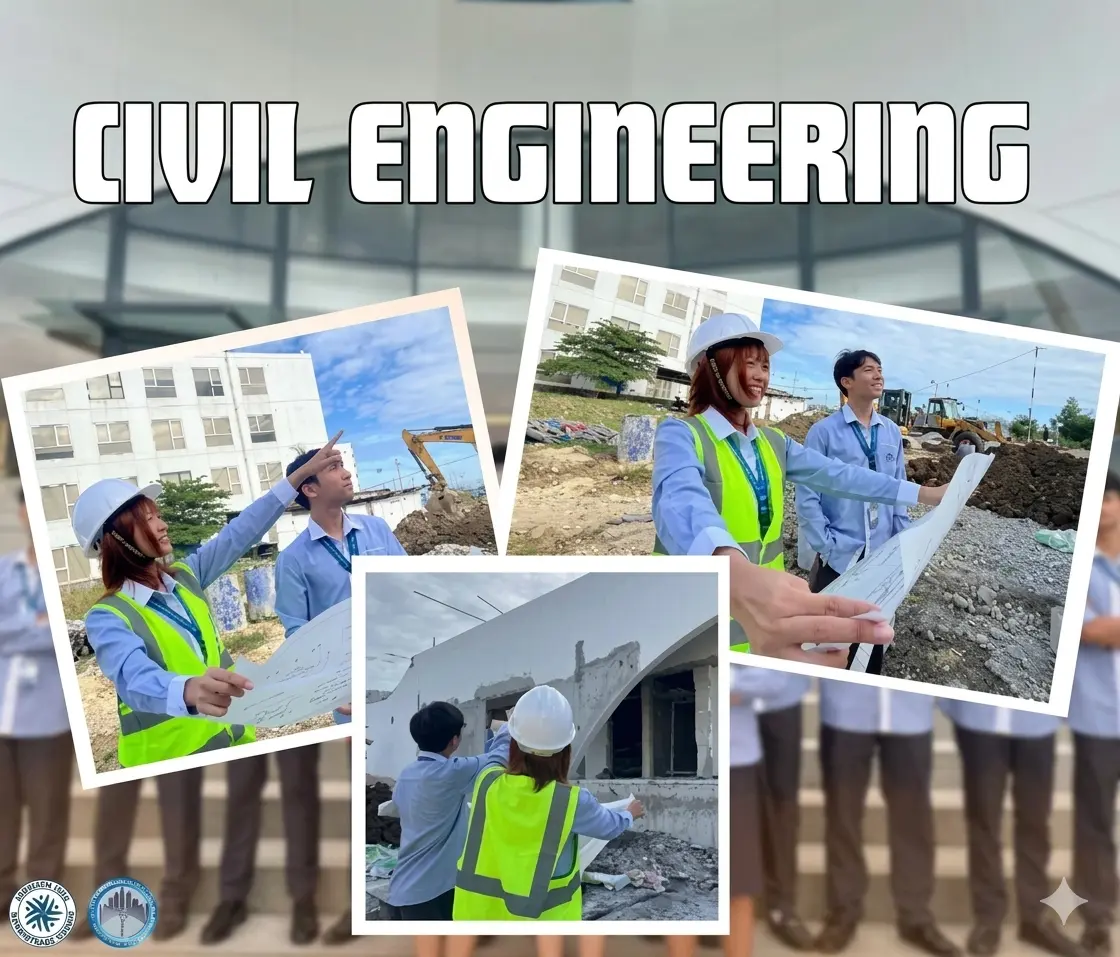
Construction Management and Methods
PICTURES OF LABORATORY
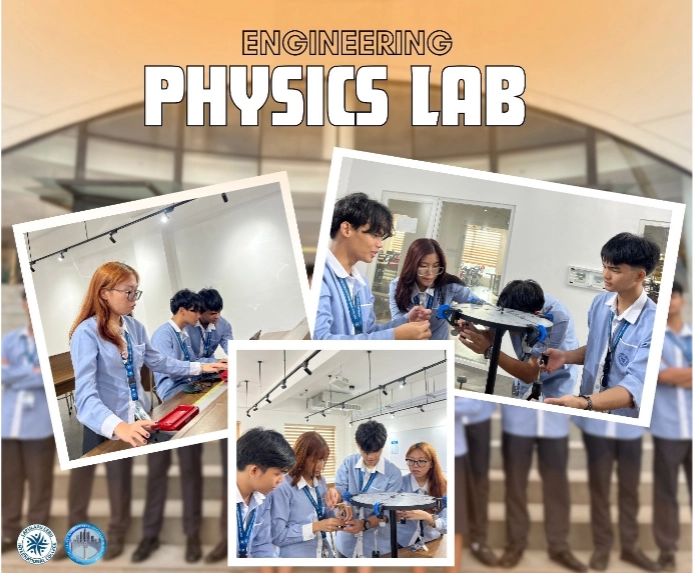
The LCIC Physics Laboratory provides an environment for students to conduct hands-on experiments to study and verify the laws and principles of physics through practical experience using various scientific instruments such as the force table, free fall apparatus, inclined plane apparatus, steam generator, Van de Graff generator, and projectile apparatus. It helps students develop scientific skills, understand theoretical concepts better and learn proper handling of instruments while maintaining safety and precision.
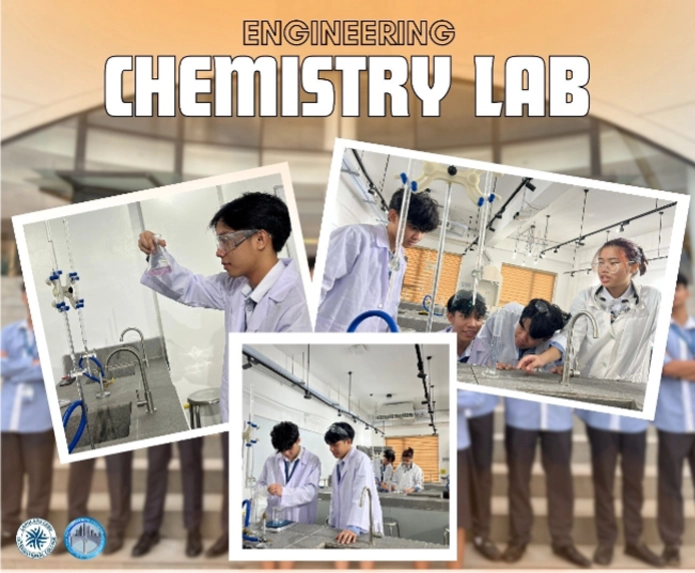
The LCIC Chemistry Laboratory is a well-equipped, controlled facility, and specialized environment for experimentation and analysis typically equipped with specialized apparatuses and hazardous chemicals that lets students apply their theoretical concepts, develop analytical skills, and learn safety protocols. It provides practical training in fundamental and applied chemistry. It is furnished with workbenches, fume hoods, gas and water supply, sinks, safety equipment such as fire extinguishers and eye wash station.
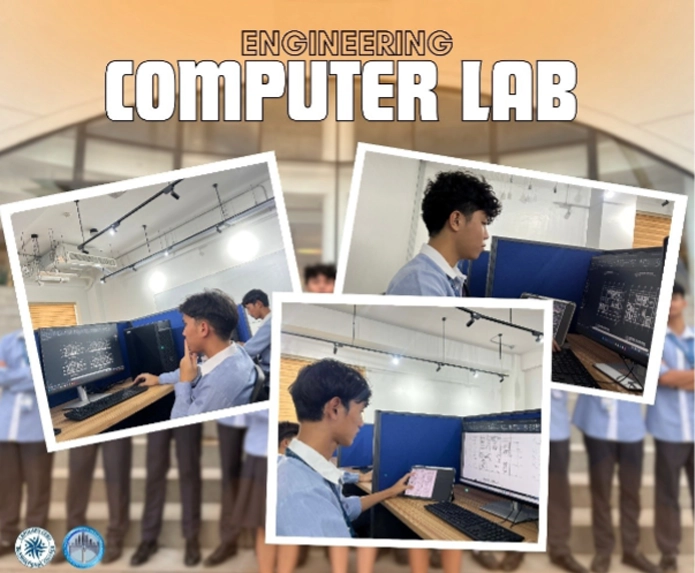
The LCIC Computer laboratory is a modern facility designed to support computational learning, computer-aided drafting, and software-based engineering applications. It provides students with experience in using computers and engineering software to solve technical and analytical problems. It is equipped with high-performance computers and licensed software relevant to civil engineering.
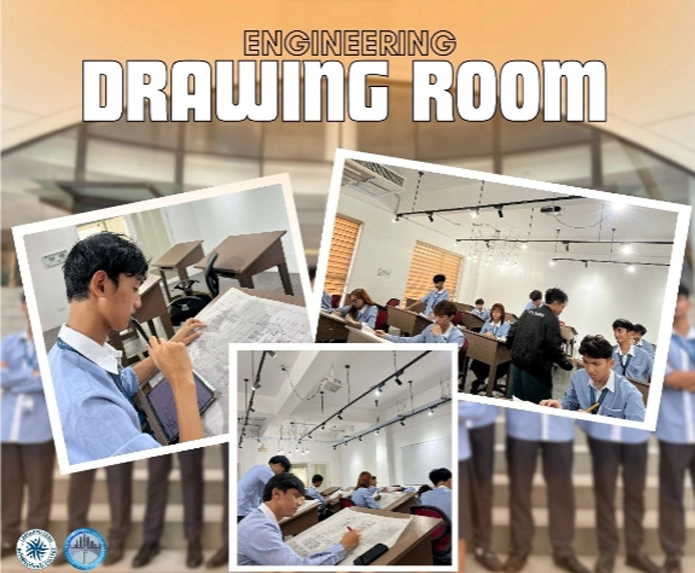
The LCIC Engineering Drawing room is a specialized workspace for students dedicated to the creation of detailed engineering and architectural design. It provides an environment for learning the fundamentals of engineering graphics. Practical session conducted in the drawing room help students translate concepts into precise drawings that follow standard conventions and codes.

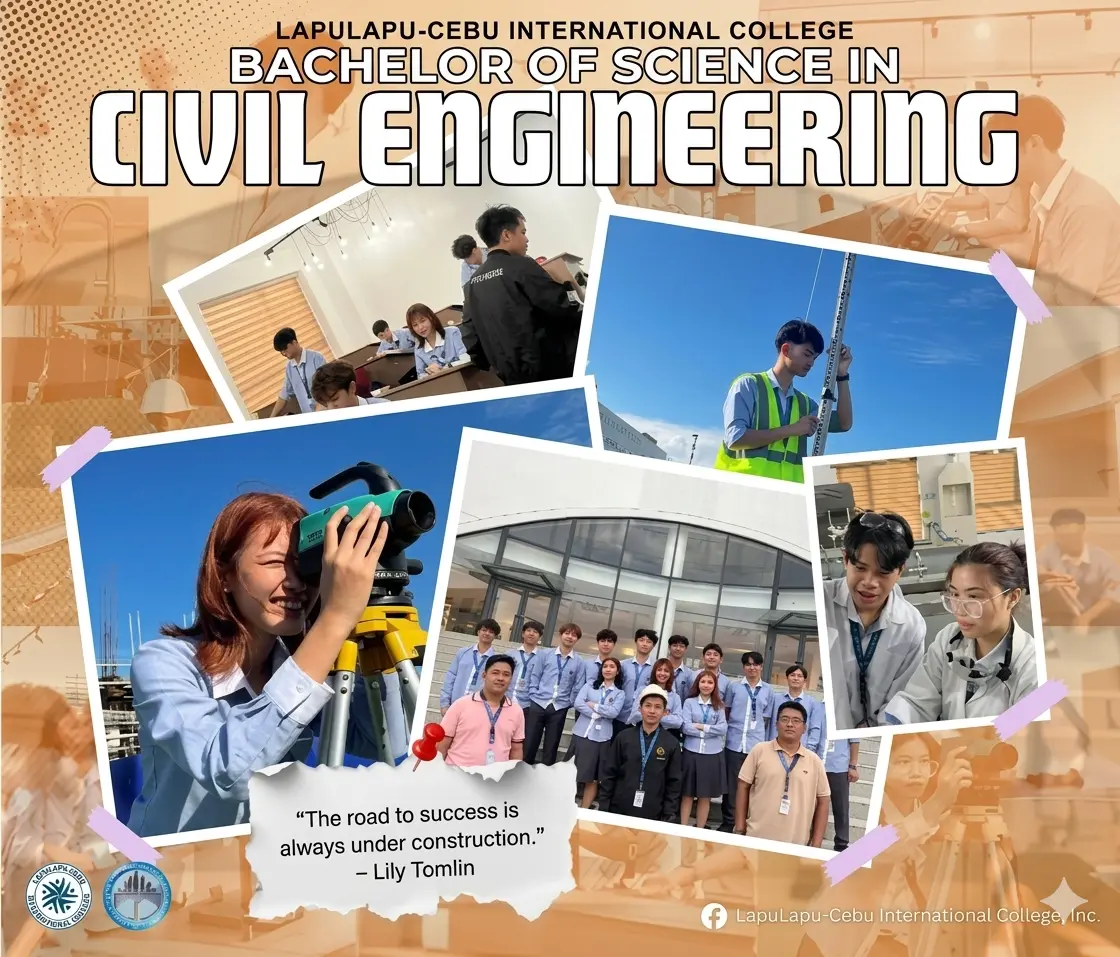
The LCIC Surveying laboratory is a practical learning facility designed to provide hands-on training in the principles and techniques of surveying. It supports theoretical concepts taught in the surveying course by allowing students to operate modern surveying instruments and perform field-based measurements in a controlled environment. It is equipped with instruments such as total stations, theodolites, dumpy and auto levels, and other related accessories.
For inquiries, contact the department email at cedept@lcic.edu.ph