
Research and Extension
The Research Office serves as a central hub that supports innovation, collaboration, and
academic excellence through impactful research. It provides essential resources, guidance, and
infrastructure for faculty, students, and partners to thrive in their scholarly pursuits.
Complementing this, the Community Extension Office bridges the institution with society through
meaningful outreach and partnerships. It transforms academic knowledge into real-world solutions
that address community needs. Together, they foster growth, development, and lasting impact both
within and beyond the campus.
Research Office
The Research Office is a central hub supporting LCIC’s research ecosystem. It provides resources, guidance, and infrastructure for faculty, students, and partners to pursue impactful research, foster innovation, and enhance academic excellence.
Vision
To be a dynamic and globally recognized center of research excellence that generates innovative knowledge, fosters interdisciplinary collaboration, and contributes to sustainable local, national, and global development.
Mission
To cultivate a vibrant research culture within the college by empowering faculty, staff, and students to pursue high-quality, ethical, and impactful research that advances knowledge and drives innovation for societal transformation.
Research Highlights and Latest News
Advancing Moral and Inclusive Education: The Research of Mr. Romeo Aquino Jr.
At a time when education is being challenged to do more than inform—to truly transform—one faculty member from our General Education Department is helping reshape the conversation. Mr. Romeo Aquino Jr. recently brought both insight and distinction to the academic stage through two compelling research presentations that question “how” and “why” we teach.
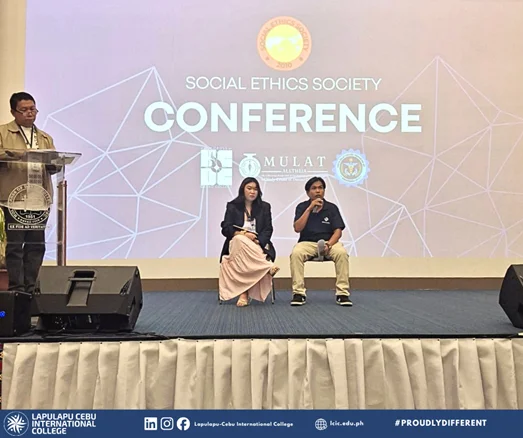
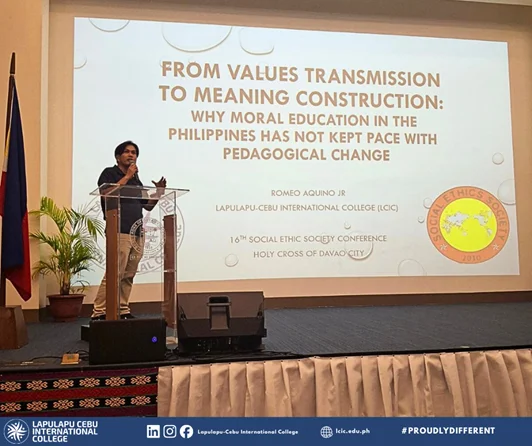
At the 16th Annual International Conference of the Social Ethics Society in Davao City, Aquino presented “From Values Transmission to Meaning Construction: Why Moral Education in the Philippines Has Not Kept Pace with Pedagogical Change,” a paper that confronts what he describes as the “enduring weakness” of moral education. Contrary to common belief, he argues that the issue is not a lack of values or policy direction, but a persistent pedagogical lag. While Philippine education claims to embrace learner-centered and 21st-century approaches, moral education remains rooted in traditional methods that is focused on rule memorization, authority, and behavioral compliance. Aquino’s thesis is clear and compelling: moral education has prioritized knowing what is right over understanding why it is right.
Using a constructivist framework informed by Piaget, Vygotsky, and Dewey, he emphasizes that ethical understanding is developmental, social, and experiential. True moral agency, he argues, emerges through dialogue, reflection, and engagement with real-life dilemmas and not passive absorption of prescribed values. This misalignment explains why many learners display superficial compliance rather than authentic moral conviction, evident in gaps between professed values and actual behavior.
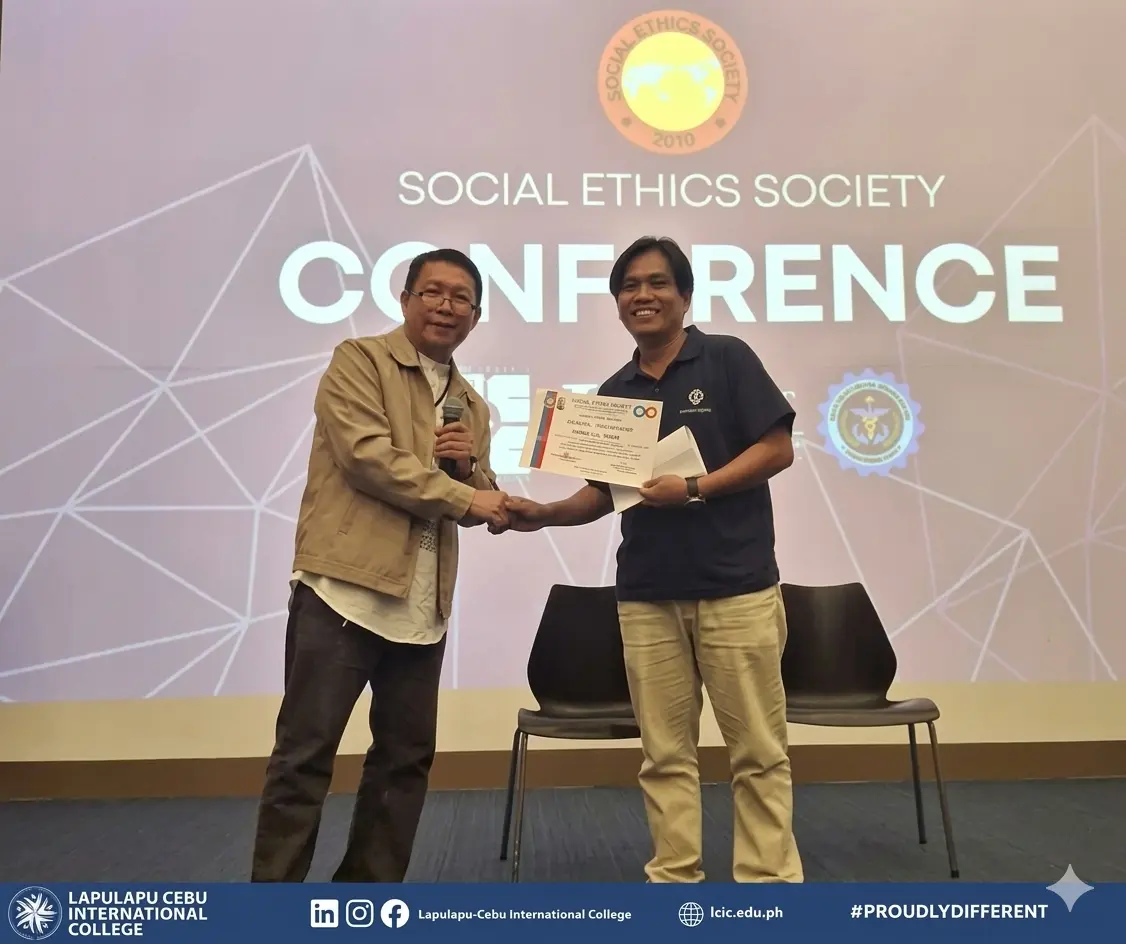
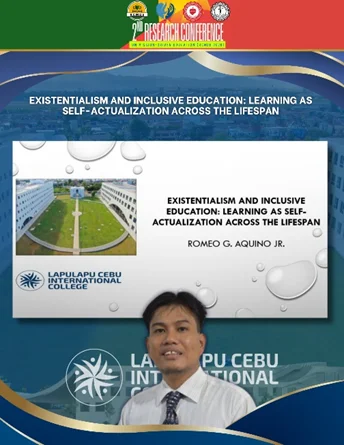
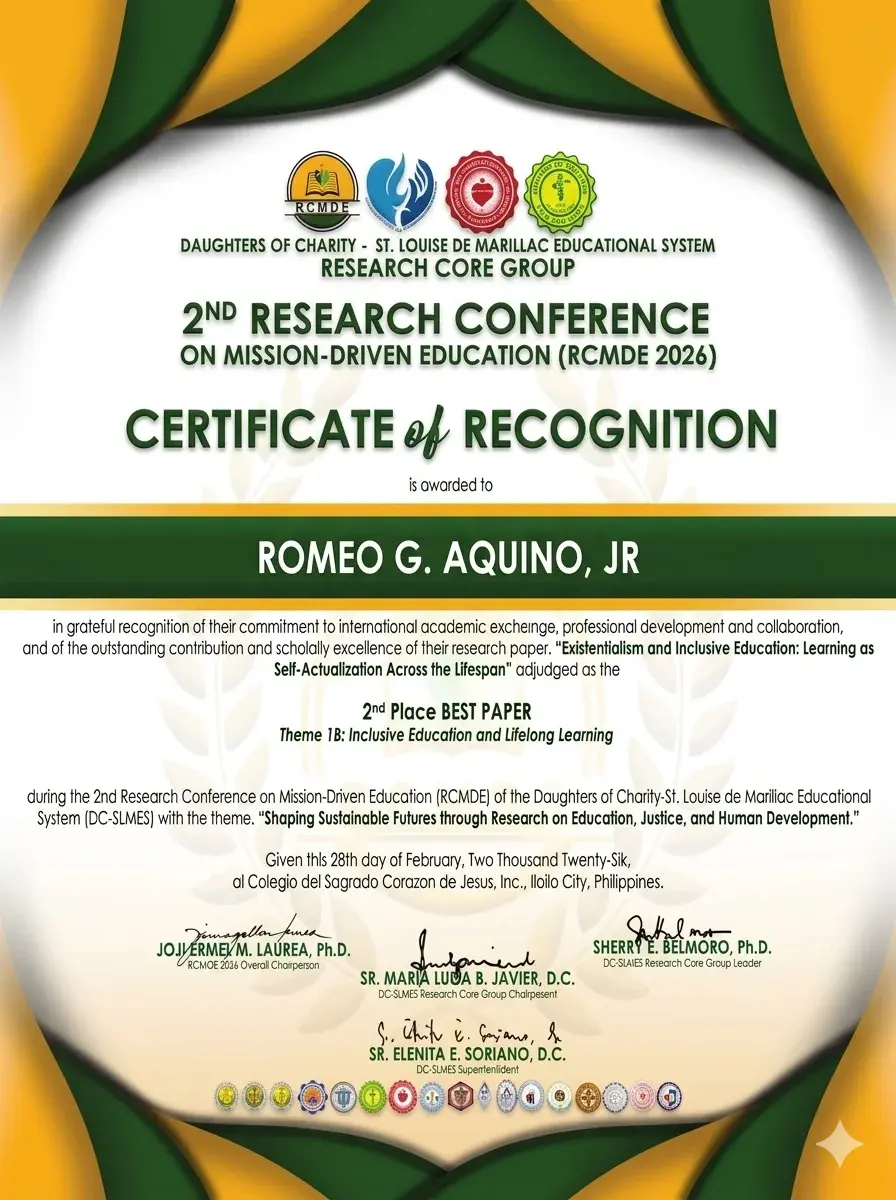
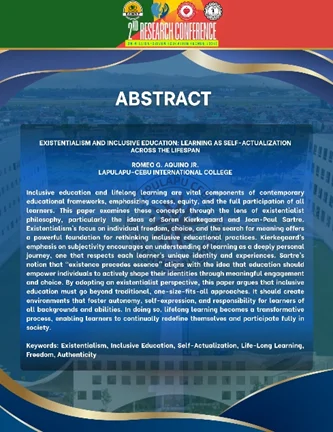
This vision deepens in his award-winning paper, “Existentialism and Inclusive Education: Learning as Self-Actualization Across the Lifespan” , which earned 2nd Place (Faculty Category under the theme: Inclusive Education and Lifelong Learning) at the DC-SLMES 2nd Research Conference on Mission Driven Education.
Here, Aquino reframes inclusion, not as a bureaucratic requirement, but as a philosophical imperative grounded in human dignity. Drawing from Soren Kierkegaard and Jean-Paul Sartre, he presents education as a process of self-creation. If, as Sartre argues, “existence precedes essence,” then learners are not defined by labels, backgrounds, or limitations; they are open possibilities. Aquino challenges traditional, mechanistic teaching by emphasizing freedom, choice, and responsibility.
In this view, learners are not passive recipients but active agents, called to authenticity rather than conformity. Inspired by Kierkegaard’s idea that “truth is subjectivity,” education becomes an inward journey where knowledge gains meaning only when personally lived. Classrooms, therefore, must shift from standardized instruction to flexible, inclusive spaces where teachers act as facilitators and co-inquirers, and where difference becomes the foundation for shared flourishing. More than a classroom philosophy, Aquino extends this framework to lifelong learning.
“Education becomes an ongoing process of self-renewal, an “unending odyssey” where individuals continually reinterpret themselves in response to life’s uncertainties. For marginalized learners, this approach is especially empowering, challenging reductive labels and affirming their capacity to shape their own futures.”
Together, Aquino’s works offer a powerful contribution to the academic community: a call to transform education from a system of transmission into a moral praxis rooted in freedom, dignity, and meaning. His research reminds us that education is not merely about producing knowledgeable individuals or shaping minds, but about shaping lives and forming persons capable of choosing, sustaining, and living the good in a complex world. Moreover, Mr. Aquino, through his research, exemplifies LCIC’s commitment to critical thinking, innovation, and meaningful academic engagement.
Community Extension Office
The Community Extension Office represents the school to the community through service, outreach, and partnerships. It translates academic expertise into real-world impact, fostering mutual growth and development by working closely with local organizations, groups, and individuals to address community needs.
Vision
Empowering communities, fostering partnerships, and creating sustainable impact through service, innovation, and collaborative growth.
Mission
To engage with communities, address needs, and promote development through partnership, service, and relevant initiatives—enhancing quality of life and fostering social responsibility.
Core Values
-
Compassion
Care for community needs
-
Integrity
Ethical, transparent service
-
Collaboration
Partnership for impact
-
Empowerment
Enable community growth
Goals
-
 Empower communities through sustainable initiatives
-
Foster partnerships for mutual growth
-
Enhance student learning through service
-
Address community needs innovatively
Objectives
-
Provide relevant services addressing community needs
-
Foster partnerships for sustainable development
-
Enhance student engagement and social responsibility
-
Promote innovative solutions for community challenges
Services
Outreach Programs
Community health, education, and livelihood initiatives.
Partnerships
Collaborations with NGOs, government agencies, and local groups.
Student Involvement
Opportunities for students to serve, learn, and develop social responsibility.