
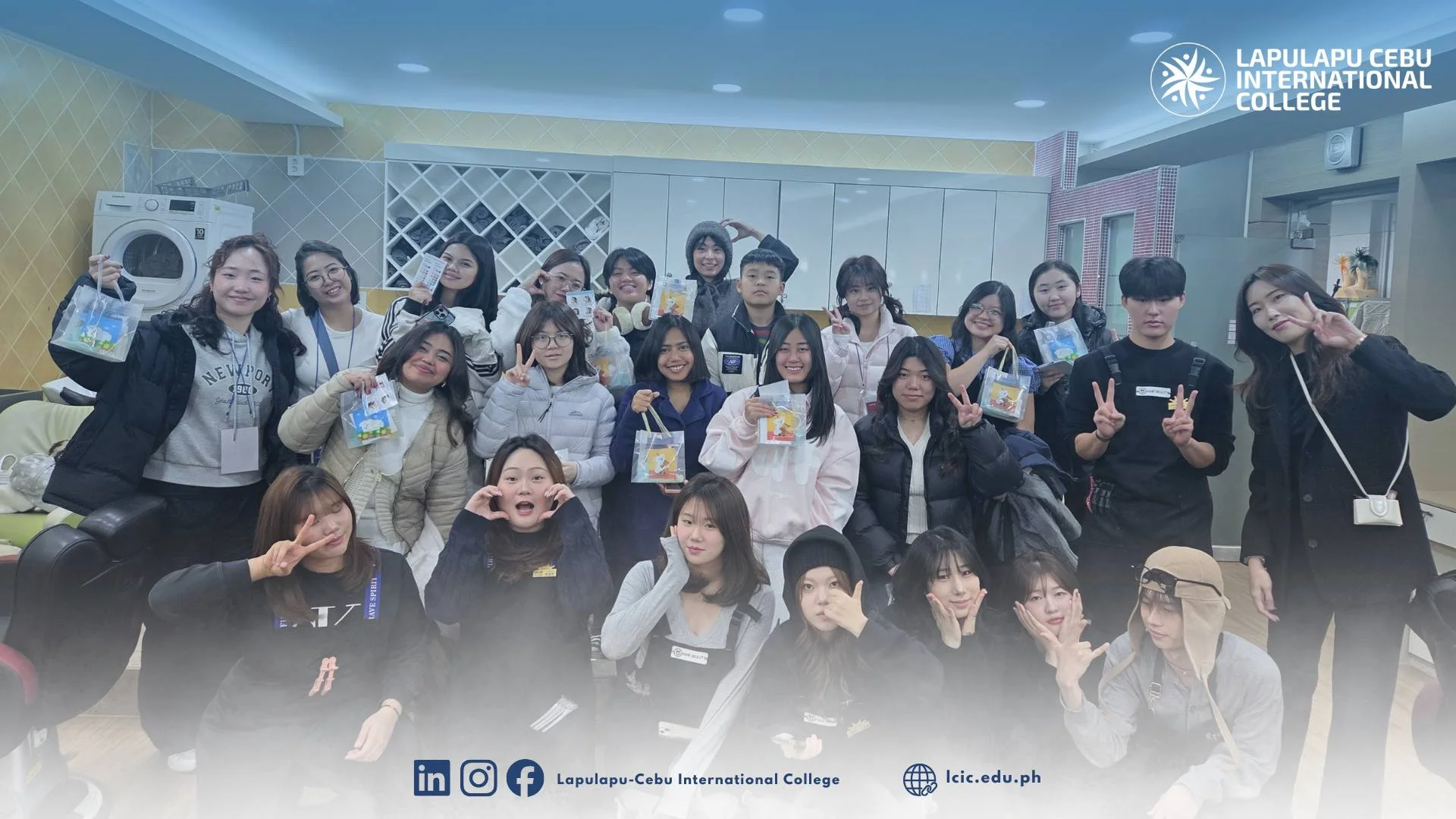
Foreign Language
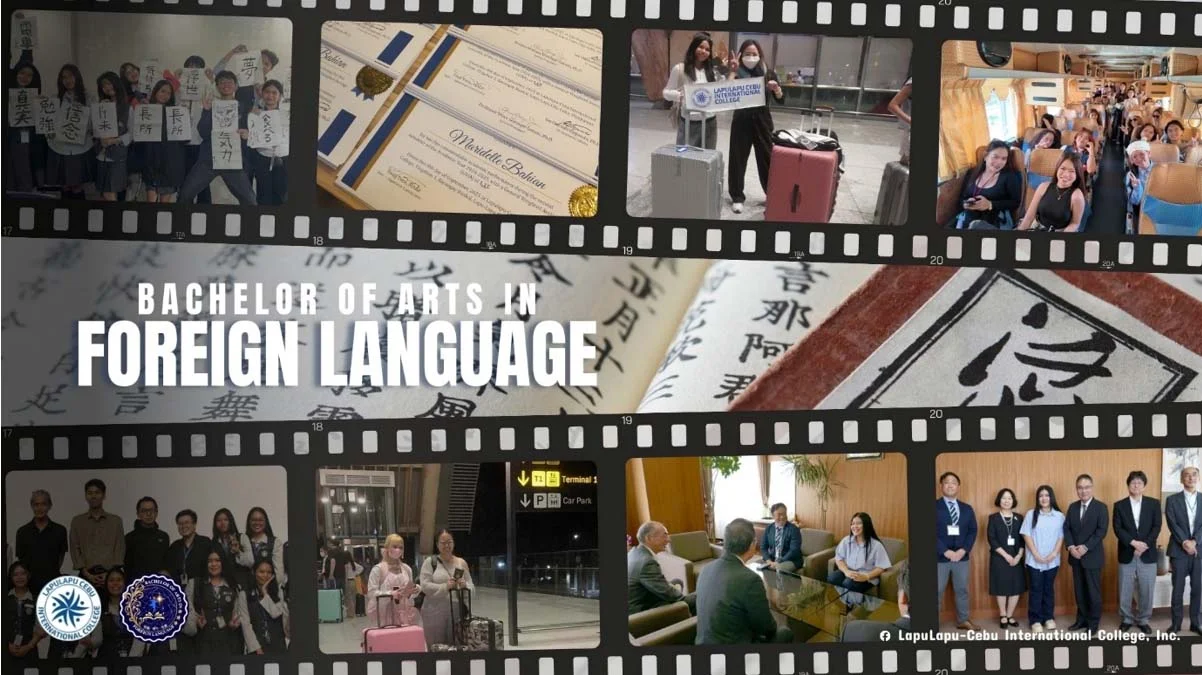
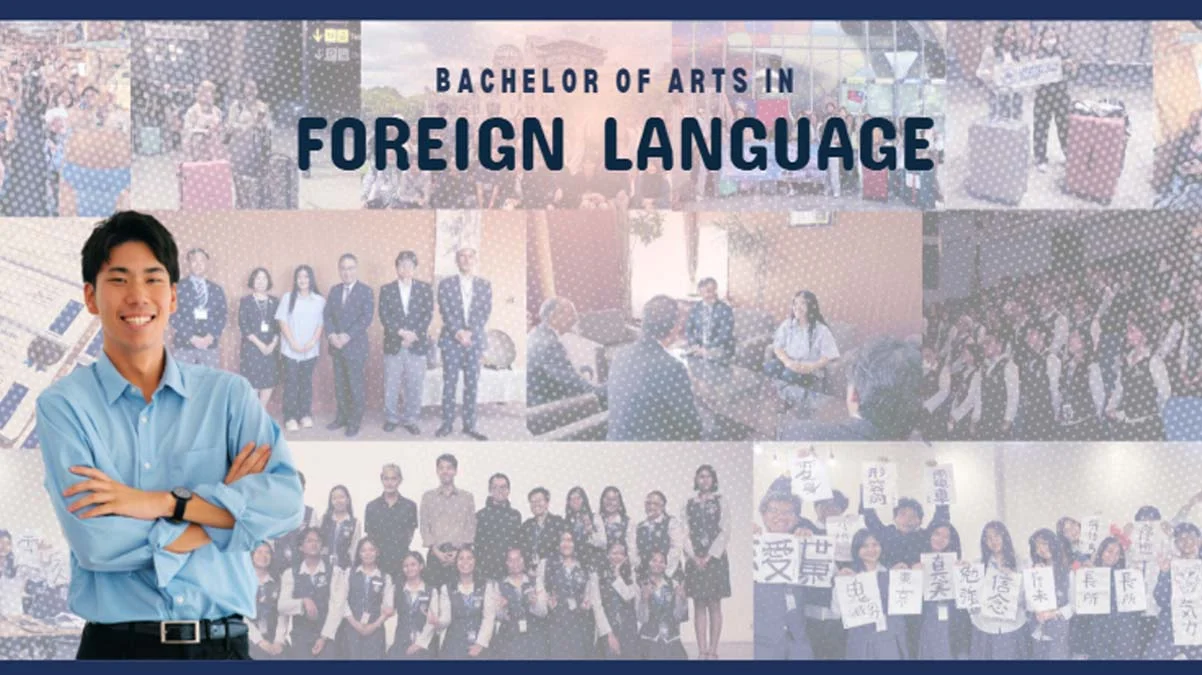
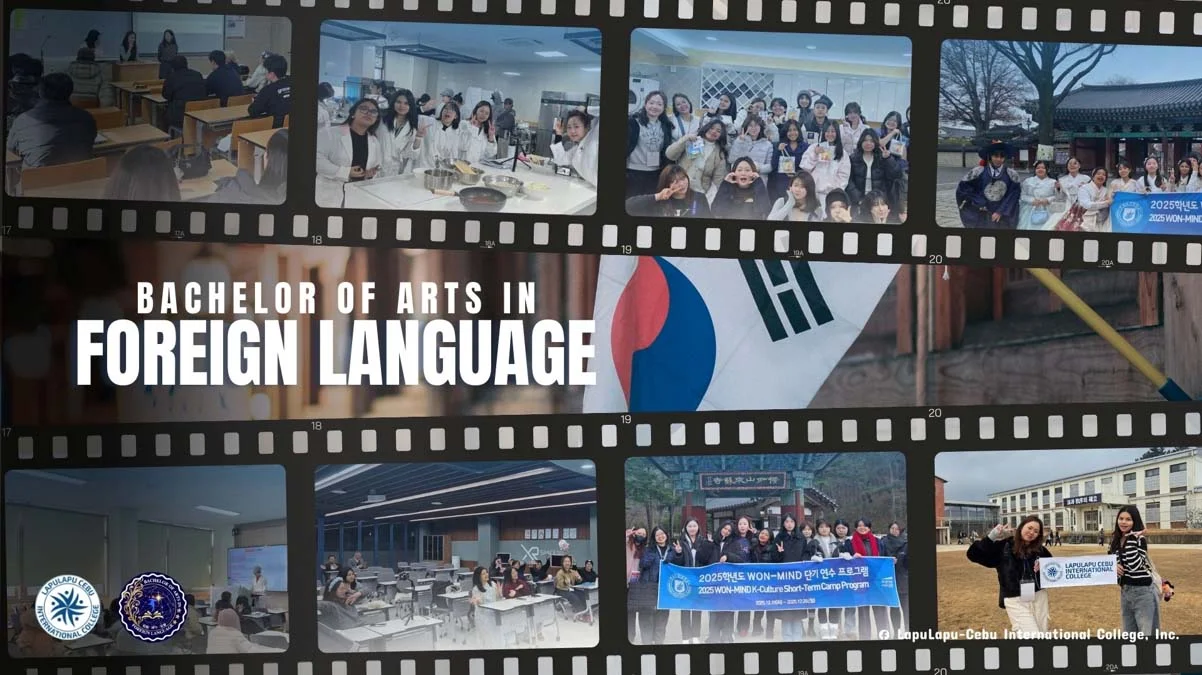
Make new connections. Transcend cultural boundaries. Build community. Immerse yourself in the study of fascinating languages such as Japanese. At LCIC, you'll find a safe space to embark on a linguistic adventure, thanks to a supportive community that facilitates your learning journey within and beyond the classroom. Our proficiency-oriented and standards-based language program emphasizes doing rather than knowing.
Program Overview
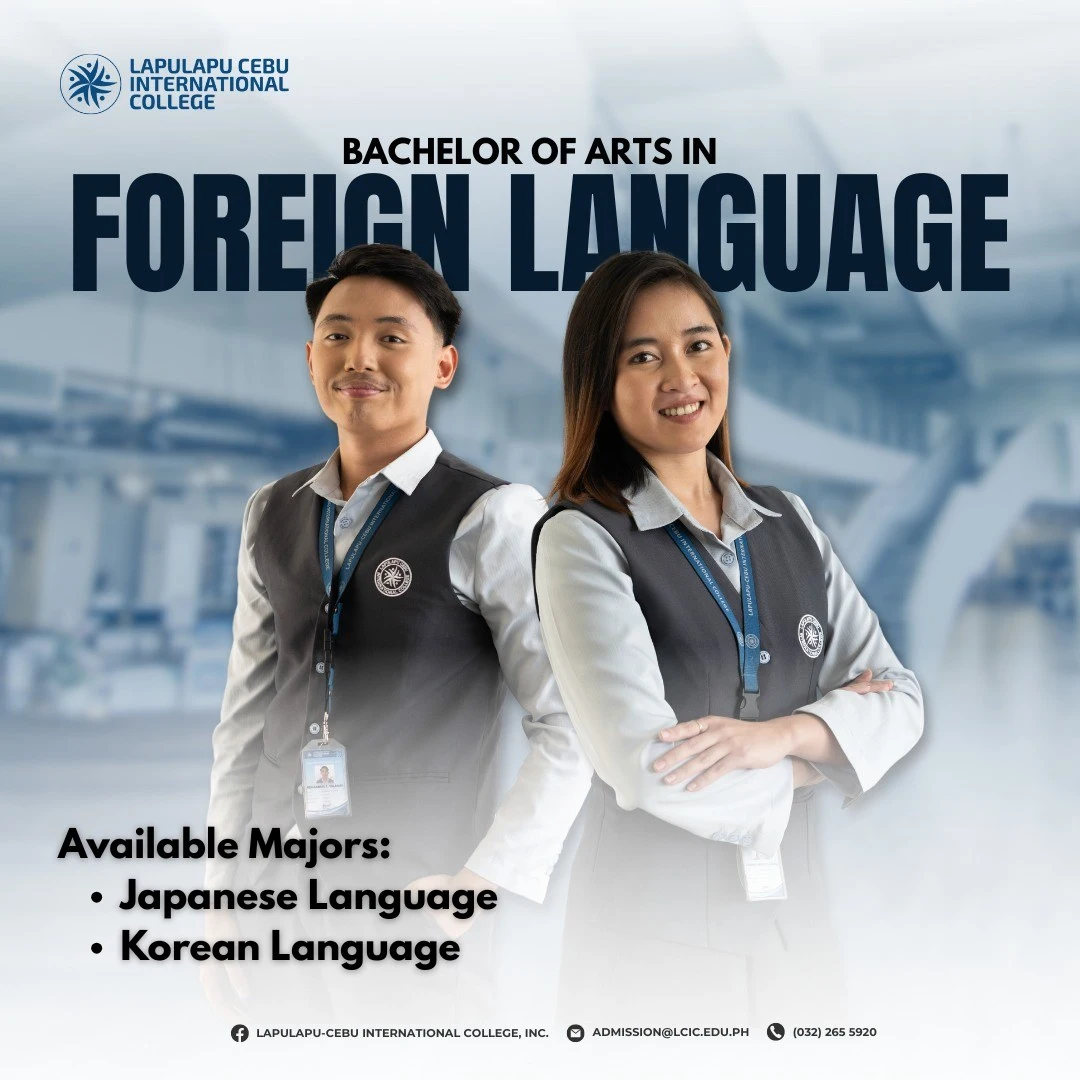
The Bachelor of Arts in Foreign Language (BAFL) program, offering majors in Japanese and
Korean, is designed to develop graduates with functional proficiency in a foreign language
and the ability to communicate effectively across social, academic, professional, and
cultural
contexts.
The program provides systematic training in listening, speaking, reading, and writing,
supported by the study of grammatical structures and appropriate language use.
Language
instruction is complemented by cultural studies that examine the history, literature, and
contemporary society of Japan and Korea, enabling students to develop informed
intercultural perspectives.
Emphasis is placed on the application of the target language in professional communication,
translation and interpretation, and academic research.
The program prepares students for
careers that require multilingual competence and cultural understanding, as well as for
further studies in language-related fields.
The program also fosters critical thinking,
cultural sensitivity, and adaptability, equipping students with the skills and confidence to
thrive in diverse international and multicultural environments.
Program Objectives
The Bachelor of Arts program aims to produce graduates who can:
-
 engage in lifelong learning and understanding of the need to
keep abreast of the
developments in the field of language study.
engage in lifelong learning and understanding of the need to
keep abreast of the
developments in the field of language study.
-
effectively communicate orally and in writing using English
and Japanese.
-
Acquire a functional grasp of grammar for communicative
purposes.
-
Appreciate the history, literature, and culture of Asian
languages.
-
Demonstrate different language skills and vocabulary needed
to carry out business
negotiations.
-
translate and interpret various types of communications;
and
-
Conduct research and other academic activities using the
target language.
Program Outcomes
Upon completion of the program, the graduates should be able to:
-
PO 1
Demonstrate functional proficiency in the Foreign Language in social, professional, academic, and cultural contexts;
-
PO 2
Apply different strategies of communication in the Foreign Language in various communicative contexts; and
-
PO 3
exhibit awareness and appreciation of the foreign language culture.
Career Pathways
Graduates of the BAFL program may pursue careers in:
-
Education and Language Training
-
Translation and Interpretation
-
International Business and Trade
-
Tourism and Hospitality
-
Media, Communications, and Creative Industries
-
Government, NGOs, and Cultural Institutions
-
Graduate and Professional Studies
BACHELOR OF ARTS IN FOREIGN LANGUAGE
(Major in Japanese)
Effective Academic Year
| CODE | DESCRIPTIVE TITLE | LEC | LAB | UNITS | PREREQUISITE
/ COREQUISITE |
|
|---|---|---|---|---|---|---|
| 1st SEMESTER | GE 1 | Understanding The Self | 3 | 0 | 3 | |
| GE 2 | Readings in Philippine History | 3 | 0 | 3 | ||
| GE 5 | Purposive Communication | 3 | 0 | 3 | ||
| JC 1 | Introduction to Language Studies | 3 | 0 | 3 | ||
| JC 2 | Introduction to Japanese History and Culture | 3 | 0 | 3 | ||
| FL 1 | Introduction to Japanese Language | 3 | 0 | 3 | ||
| PE 1 | Physical Activities Towards Health and Fitness (PATH-FIT) 1 | 2 | 0 | 2 | ||
| NSTP 1 | Civic Welfare Training Service I | 3 | 0 | 3 | ||
| TOTAL | 23 | 0 | 23 | |||
| CODE | DESCRIPTIVE TITLE | LEC | LAB | UNITS | PREREQUISITE
/ COREQUISITE |
|
|---|---|---|---|---|---|---|
| 2nd SEMESTER | GE 3 | The Contemporary World | 3 | 0 | 3 | |
| GE 4 | Mathematics in the Modern World | 3 | 0 | 3 | ||
| GE 6 | Art Appreciation | 3 | 0 | 3 | ||
| FL 2 | Basic Japanese I | 3 | 2 | 5 | FL 1 | |
| FL 3 | Basic Japanese II | 3 | 2 | 5 | FL 2 / JLPT N5 | |
| JC 3 | Japanese Business and Workplace | 3 | 0 | 3 | ||
| PE 2 | Physical Activities Towards Health and Fitness (PATH-FIT) 2 | 2 | 0 | 2 | PE 1 | |
| NSTP 2 | Civic Welfare Training Service II | 3 | 0 | 3 | NSTP 1 | |
| TOTAL | 23 | 4 | 27 | |||
| CODE | DESCRIPTIVE TITLE | LEC | LAB | UNITS |
PREREQUISITE / COREQUISITE |
|
|---|---|---|---|---|---|---|
| 1st SEMESTER | GE 7 | Science, Technology, and Society | 3 | 0 | 3 | |
| GE 8 | Ethics | 3 | 0 | 3 | ||
| GEE 1 | The Entrepreneurial Mind | 3 | 0 | 3 | ||
| JC 4 | Cross Cultural Communication | 3 | 0 | 3 | ||
| FL 4 | Intermediate Japanese I | 3 | 2 | 5 | FL 3 | |
| FL 5 | Intermediate Japanese II | 3 | 2 | 5 | FL 3 / FL 4 | |
| PE 3 | Physical Activities Towards Health and Fitness (PATH-FIT) 3 | 2 | 0 | 2 | PE 2 | |
| TOTAL | 20 | 4 | 24 | |||
| CODE | DESCRIPTIVE TITLE | LEC | LAB | UNITS |
PREREQUISITE / COREQUISITE |
|
|---|---|---|---|---|---|---|
| 2nd SEMESTER | GEE 2 | Great Books | 3 | 0 | 3 | |
| RIZ 1 | Rizal's Life, Work, and Writings | 3 | 0 | 3 | ||
| FL 6 | Japanese Civilization | 3 | 0 | 3 | ||
| FL 7 | Advanced Japanese I | 3 | 2 | 5 | FL 5 / JLPT N4 | |
| LE 1 | Language Elective I | 3 | 0 | 3 | ||
| PE 4 | Physical Activities Towards Health and Fitness (PATH-FIT) 4 | 2 | 0 | 2 | PE 3 | |
| TOTAL | 17 | 2 | 19 | |||
| CODE | DESCRIPTIVE TITLE | LEC | LAB | UNITS |
PREREQUISITE / COREQUISITE |
|
|---|---|---|---|---|---|---|
| 1st SEMESTER | GEE 3 | Living in the IT Era | 3 | 0 | 3 | |
| FL 8 | Advanced Japanese II | 3 | 2 | 5 | FL 7 | |
| FL 9 | Technical Writing in Japanese | 3 | 0 | 3 | FL 7 / FL 8 | |
| COG 1 | Specialized Course 1 | 3 | 0 | 3 | ||
| LE 2 | Language Elective II | 3 | 0 | 3 | LE 1 | |
| TOTAL | 15 | 2 | 17 | |||
| CODE | DESCRIPTIVE TITLE | LEC | LAB | UNITS |
PREREQUISITE / COREQUISITE |
|
|---|---|---|---|---|---|---|
| 2nd SEMESTER | FL 10 | Special Topics in Japanese Language | 3 | 0 | 3 | FL 8 & FL 9 |
| FL 11 | Composition in Japanese Language | 3 | 0 | 3 | FL 9 / JLPT N3 | |
| FL 14 | Methodology in Language Research | 3 | 0 | 3 | 3rd year status | |
| COG 2 | Specialized Course 2 | 3 | 0 | 3 | ||
| LE 3 | Language Elective III | 3 | 0 | 3 | LE 2 | |
| TOTAL | 15 | 0 | 15 | |||
| CODE | DESCRIPTIVE TITLE | LEC | LAB | UNITS |
PREREQUISITE / COREQUISITE |
|
|---|---|---|---|---|---|---|
| 1st SEMESTER | FL 12 | Reading in Japanese Language | 3 | 0 | 3 | |
| FL 13 | Introduction to Japanese Literature | 3 | 0 | 3 | ||
| FL 15 | Language Research | 3 | 0 | 3 | FL 14 | |
| COG 3 | Specialized Course 3 | 3 | 0 | 3 | ||
| COG 4 | Specialized Course 4 | 3 | 0 | 3 | ||
| LE 4 | Language Elective IV | 3 | 0 | 3 | LE 3 | |
| TOTAL | 18 | 0 | 18 | |||
| CODE | DESCRIPTIVE TITLE | LEC | LAB | NO. OF HOURS |
PREREQUISITE / COREQUISITE |
|
|---|---|---|---|---|---|---|
| 2nd SEMESTER | FL 16 | Pre-Service Training (Practicum / OJT) | 6 | 0 | 600 | Completion of all subjects / JLPT N2 |
| TOTAL | 6 | 0 | 600 | |||
Specialized Courses (Cognates)
A. Translation Theories
- 1. Theories of Translation
- 2. Literary Translation
- 3. Language and Text Analysis
- 4. Non-literary Translation
B. Language Teaching
- 1. Theories of Acquisition
- 2. Language, Culture & Society
- 3. Teaching Methods
- 4. Special Topics in Education
C. International Business
- 1. Non-literary Translation
- 2. Business Culture
- 3. Business Comm in Japanese
- 4. Business Communication in Japanese Language 2
Note: For FL 16 (Practicum), the student
can choose from the following field of
specialization:
Practicum A: Practicum for Pre-Service Translators / Interpreters
Practicum B: Practicum for Pre-Service Teachers / Educators
Practicum C: Practicum for Pre-Service Foreign Language and
International Business
Relation Officer
BACHELOR OF ARTS IN FOREIGN LANGUAGE
(Major in Korean)
Effective Academic Year
| CODE | DESCRIPTIVE TITLE | LEC | LAB | UNIT/S |
PREREQUISITES / COREQUISITES |
|
|---|---|---|---|---|---|---|
| 1st SEMESTER | GE 1 | Understanding The Self | 3 | 0 | 3 | |
| GE 2 | Readings in Philippine History | 3 | 0 | 3 | ||
| FC 1 | Introduction to Language Studies | 3 | 0 | 3 | ||
| KL 1 | Introductory Korean I | 3 | 0 | 3 | / KL 2 | |
| KL 2 | Introductory Korean II | 3 | 0 | 3 | / KL 1 | |
| NSTP 1 | Civic Welfare Training Service 1 | 3 | 0 | 3 | ||
| PE 1 | Physical Activities Towards Health and Fitness (PATH-FIT) 1 | 2 | 0 | 2 | ||
| KEH 1 | Language Enhancement 1 | (6) | 0 | 0 | ||
| TOTAL | 20 | 0 | 20 | |||
| CODE | DESCRIPTIVE TITLE | LEC | LAB | UNIT/S |
PREREQUISITES / COREQUISITES |
|
|---|---|---|---|---|---|---|
| 2nd SEMESTER | GE 3 | The Contemporary World | 3 | 0 | 3 | |
| GE 4 | Mathematics in the Modern World | 3 | 0 | 3 | ||
| FC 2 | Cross Cultural Communication | 3 | 0 | 3 | ||
| KL 3 | Basic Korean I | 3 | 0 | 3 | KL 2 / KL 4 | |
| KL 4 | Basic Korean II | 3 | 0 | 3 | KL 2 / KL 3 | |
| NSTP 2 | Civic Welfare Training Service 2 | 3 | 0 | 3 | NSTP 1 | |
| PE 2 | Physical Activities Towards Health and Fitness (PATH-FIT) 2 | 2 | 0 | 2 | PE 1 | |
| KEH 2 | Language Enhancement 2 | (6) | 0 | 0 | ||
| TOTAL | 20 | 0 | 20 | |||
| CODE | DESCRIPTIVE TITLE | LEC | LAB | UNIT/S |
PREREQUISITES / COREQUISITES |
|
|---|---|---|---|---|---|---|
| 1st SEMESTER | GE 5 | Purposive Communication | 3 | 0 | 3 | |
| GE 6 | Art Appreciation | 3 | 0 | 3 | ||
| GE 7 | Science, Technology, and Society | 3 | 0 | 3 | ||
| GEE 1 | The Entrepreneurial Mind | 3 | 0 | 3 | ||
| KL 5 | Intermediate Korean I | 3 | 0 | 3 | KL 4 / KL 6 | |
| KL 6 | Intermediate Korean II | 3 | 0 | 3 | KL 4 / KL 5 | |
| PE 3 | Physical Activities Towards Health and Fitness (PATH-FIT) 3 | 2 | 0 | 2 | PE 2 | |
| KEH 3 | Language Enhancement 3 | (6) | 0 | 0 | ||
| TOTAL | 20 | 0 | 20 | |||
| CODE | DESCRIPTIVE TITLE | LEC | LAB | UNIT/S |
PREREQUISITES / COREQUISITES |
|
|---|---|---|---|---|---|---|
| 2nd SEMESTER | GEE 2 | Great Books | 3 | 0 | 3 | |
| GEE 3 | Living in the IT Era | 3 | 0 | 3 | ||
| GE 8 | Ethics | 3 | 0 | 3 | ||
| RIZ 1 | Rizal's Life, Work, and Writings | 3 | 0 | 3 | ||
| KL 7 | Intermediate Korean III | 3 | 0 | 3 | KL 6 / KL 8 | |
| KL 8 | Intermediate Korean IV | 3 | 0 | 3 | KL 6 / KL 7 | |
| PE 4 | Physical Activities Towards Health and Fitness (PATH-FIT) 4 | 2 | 0 | 2 | ||
| FE 1 | Language Elective I (Japanese) | 3 | 0 | 3 | ||
| KEH 4 | Language Enhancement 4 | (6) | 0 | 0 | ||
| TOTAL | 23 | 0 | 23 | |||
| CODE | DESCRIPTIVE TITLE | LEC | LAB | UNIT/S |
PREREQUISITES / COREQUISITES |
|
|---|---|---|---|---|---|---|
| 1st SEMESTER | KL 9 | Pre-advanced Korean I | 3 | 0 | 3 | KL 8 / |
| KL 10 | Pre-advanced Korean II | 3 | 0 | 3 | KL 8 / | |
| KL 21 | Korean Culture and Civilization | 3 | 0 | 3 | ||
| KL 22 | Introduction to Korean Literature | 3 | 0 | 3 | ||
| KCG 1 | Specialized Course I | 3 | 0 | 3 | ||
| FE 2 | Language Elective II (Japanese) | 3 | 0 | 3 | FE 1 | |
| KEH 5 | Language Enhancement 5 | (6) | 0 | 0 | ||
| TOTAL | 18 | 0 | 18 | |||
| CODE | DESCRIPTIVE TITLE | LEC | LAB | UNIT/S |
PREREQUISITES / COREQUISITES |
|
|---|---|---|---|---|---|---|
| 2nd SEMESTER | KL 11 | Advanced Korean I | 3 | 0 | 3 | KL 10 / KL 9 |
| KL 12 | Advanced Korean II | 3 | 0 | 3 | KL 10 / | |
| FL 31 | Methodology in Language Research | 3 | 0 | 3 | ||
| KCG 2 | Specialized Course 2 | 3 | 0 | 3 | ||
| KCG 3 | Specialized Course 3 | 3 | 0 | 3 | ||
| FE 3 | Language Elective III | 3 | 0 | 3 | FE 2 | |
| KEH 6 | Language Enhancement 6 | (6) | 0 | 0 | ||
| TOTAL | 18 | 0 | 18 | |||
| CODE | DESCRIPTIVE TITLE | LEC | LAB | UNIT/S |
PREREQUISITES / COREQUISITES |
|
|---|---|---|---|---|---|---|
| 1st SEMESTER | KL 13 | Advanced Korean III | 3 | 0 | 3 | KL 12 / KL 11 |
| KL 14 | Advanced Korean IV | 3 | 0 | 3 | KL 12 / KL 11 | |
| FL 32 | Language Research | 3 | 0 | 3 | FL 31 | |
| KCG 4 | Specialized Course 4 | 3 | 0 | 3 | ||
| FE 4 | Language Elective IV | 3 | 0 | 3 | ||
| KEH 7 | Language Enhancement 7 | (6) | 0 | 0 | ||
| TOTAL | 15 | 0 | 15 | |||
| CODE | DESCRIPTIVE TITLE | LEC | LAB | UNIT/S |
PREREQUISITES / COREQUISITES |
|
|---|---|---|---|---|---|---|
| 2nd SEMESTER | FL 33 | Practicum / OJT | 600 | 0 | 6 | Completion of all subjects |
| KL 115 | Advanced Topics in Korean I* | (3) | 0 | (3) | KL 14 | |
| KL 116 | Advanced Topics in Korean II* | (3) | 0 | (3) | KL 14 | |
| KL 117 | Advanced Topics in Korean III* | (3) | 0 | (3) | KL 14 | |
| KL 118 | Advanced Topics in Korean IV* | (3) | 0 | (3) | KL 14 | |
| TOTAL | 600 | 0 | 6 | |||
*for advance students with prior Korean language proficiency
Specialized Courses (Cognates)
A. Business Communication
- a. Non-literary Translation
- b. Business Culture
- c. Business Communication in Korean Language 1
- d. Business Communication in Korean Language 2
SUMMARY OF UNITS
| YEAR LEVEL | 1ST SEM | 2ND SEM |
|---|---|---|
| First Year | 20 | 20 |
| Second Year | 20 | 23 |
| Third Year | 18 | 18 |
| Fourth Year | 15 | 6 |
| TOTAL | 73 | 67 |
| TOTAL UNITS: 140 | ||
Faculty

Ms. Jennylyn Cui, LPT, MST
Department Chair, Bachelor of Arts in Foreign Language
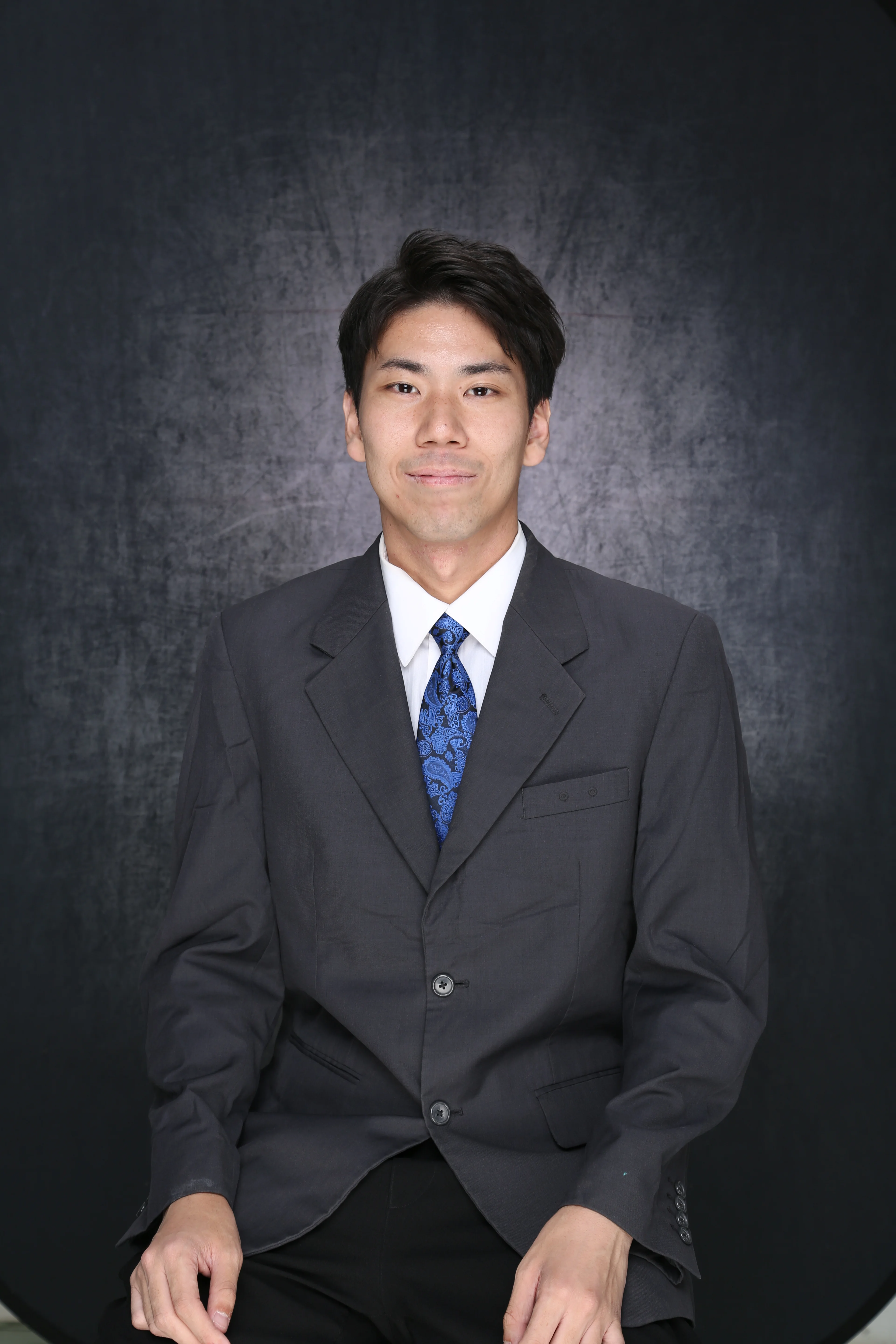
Mr. Tatsuto Toyota
Japanese Instructor
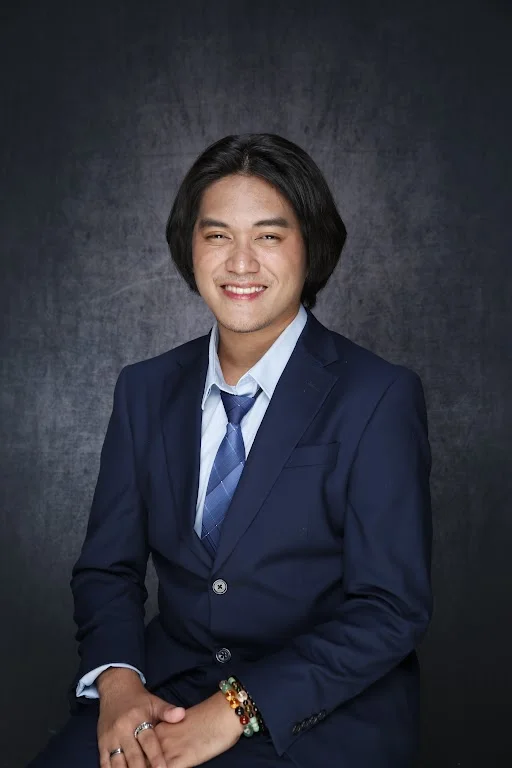
Mr. Rafael Olasiman
Japanese Instructor
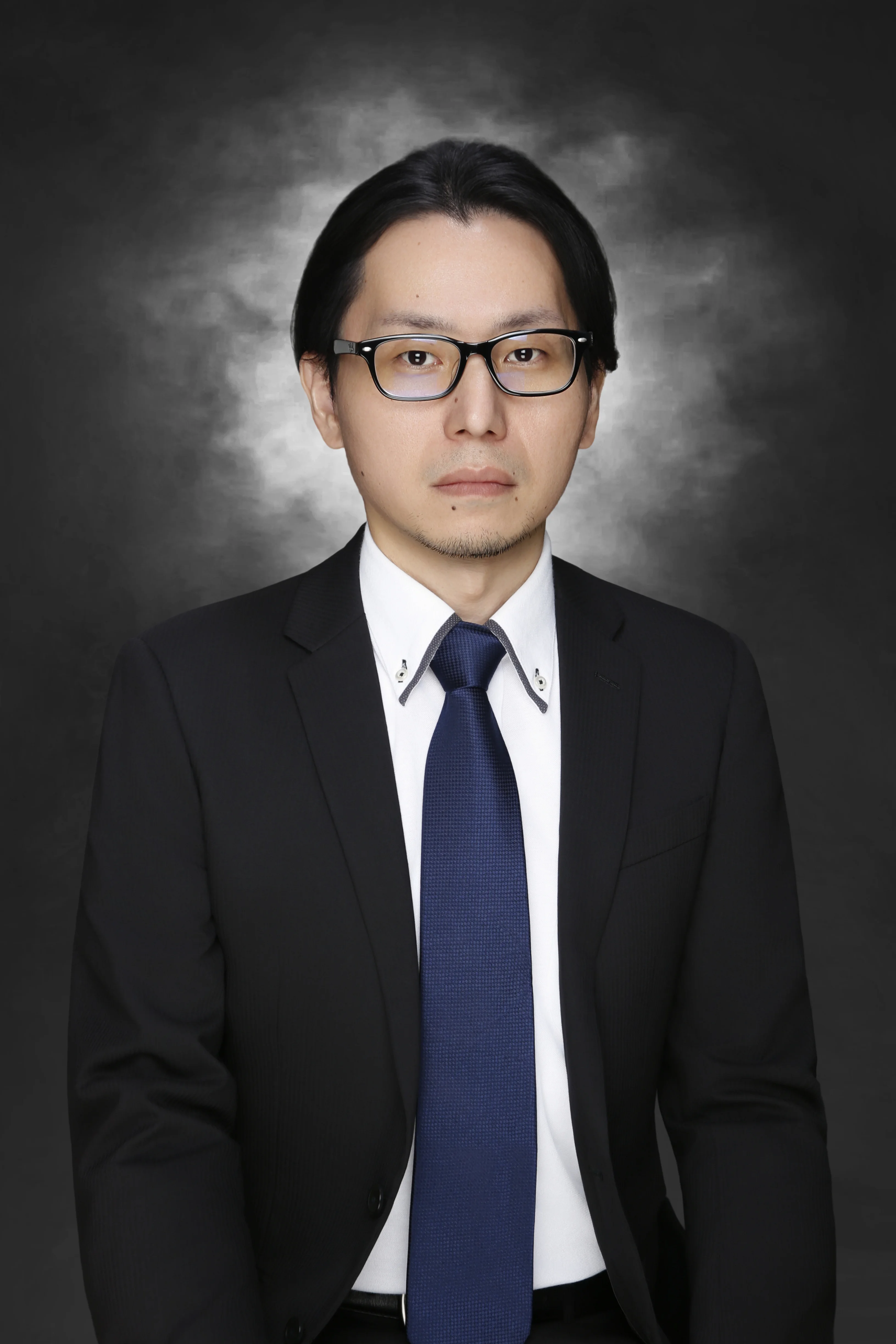
Mr. Kaito Mochida
Japanese Instructor
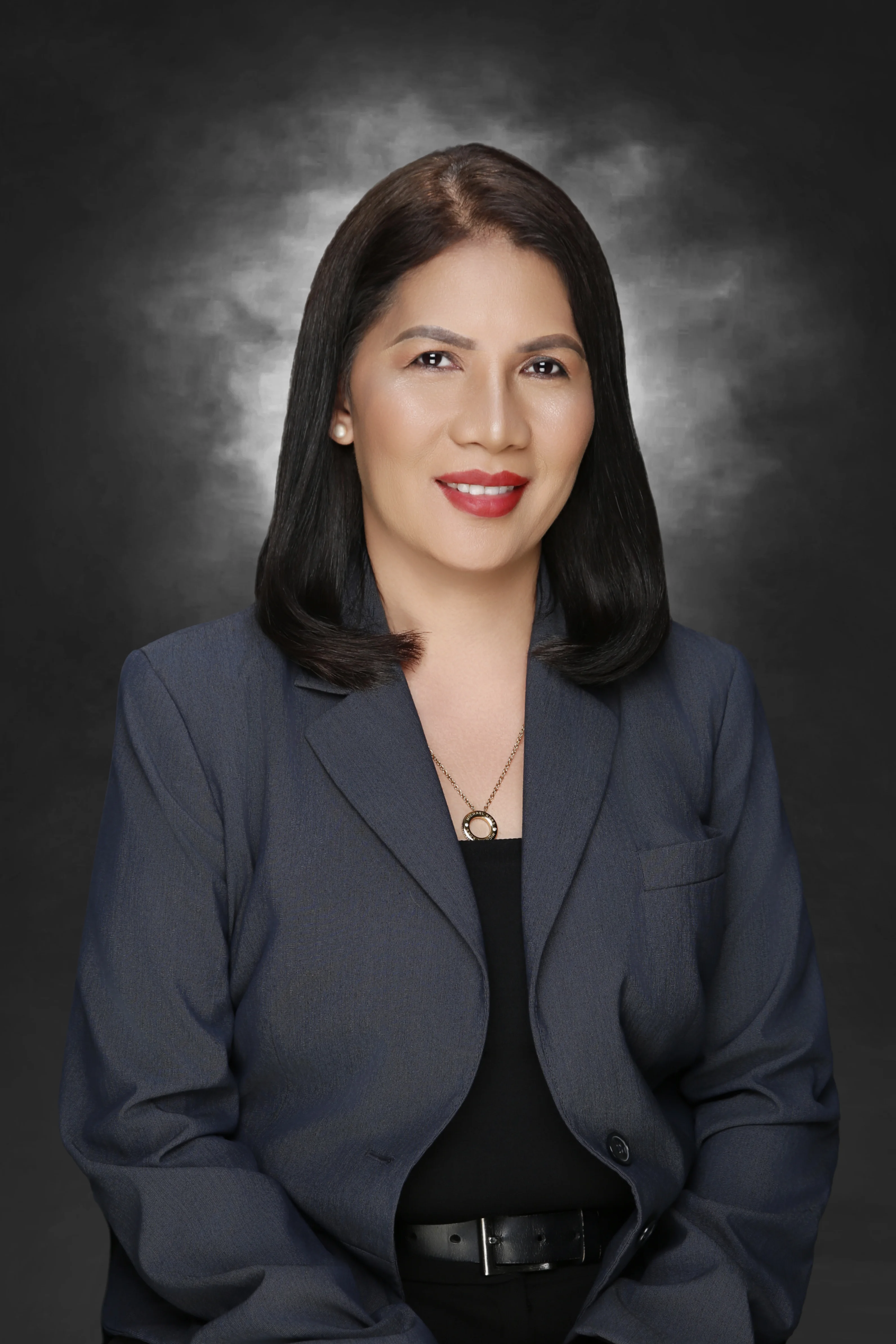
Ms. Charina Saito
Japanese Instructor
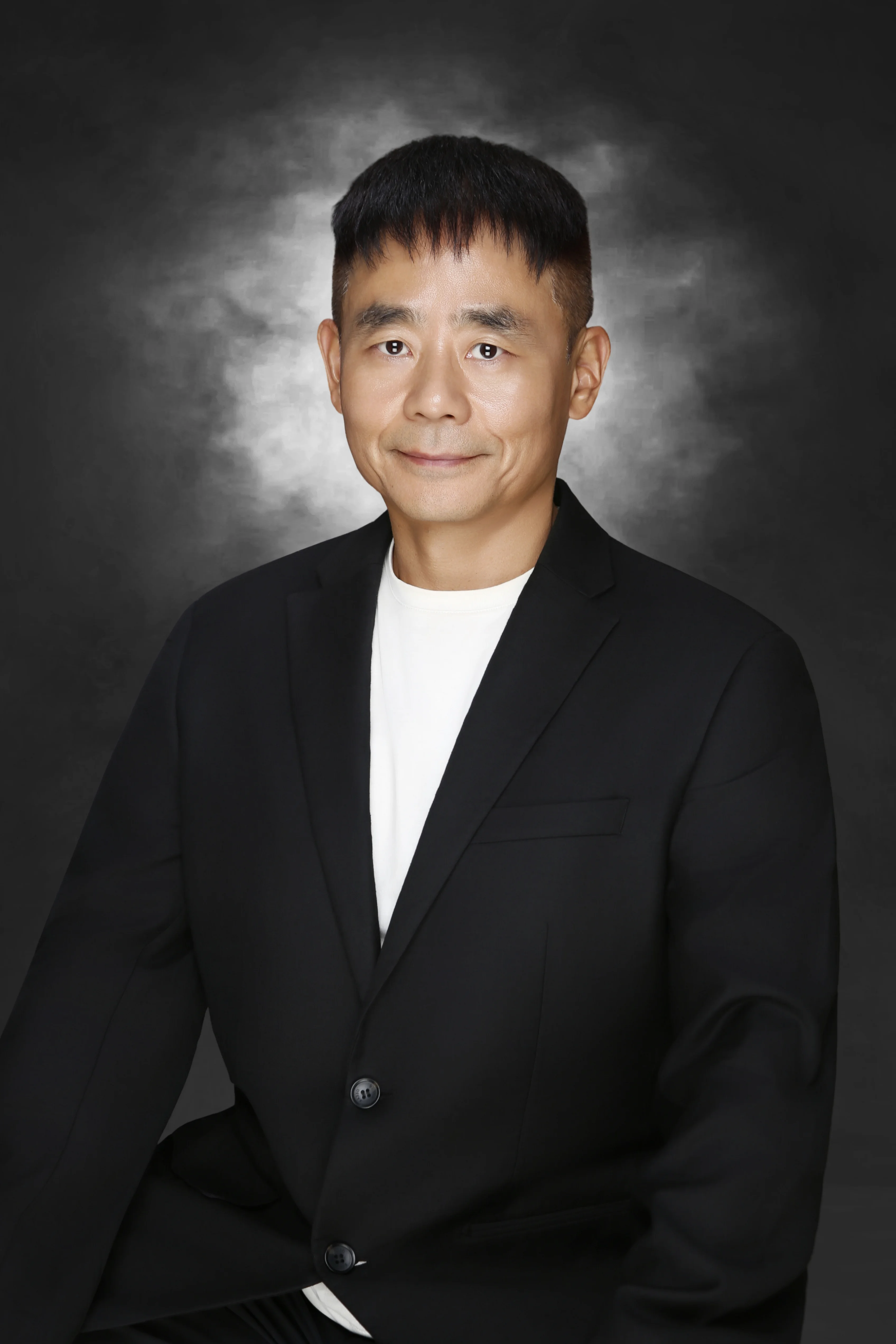
Mr. Gwang Ill Kim, M.A.
Korean Instructor
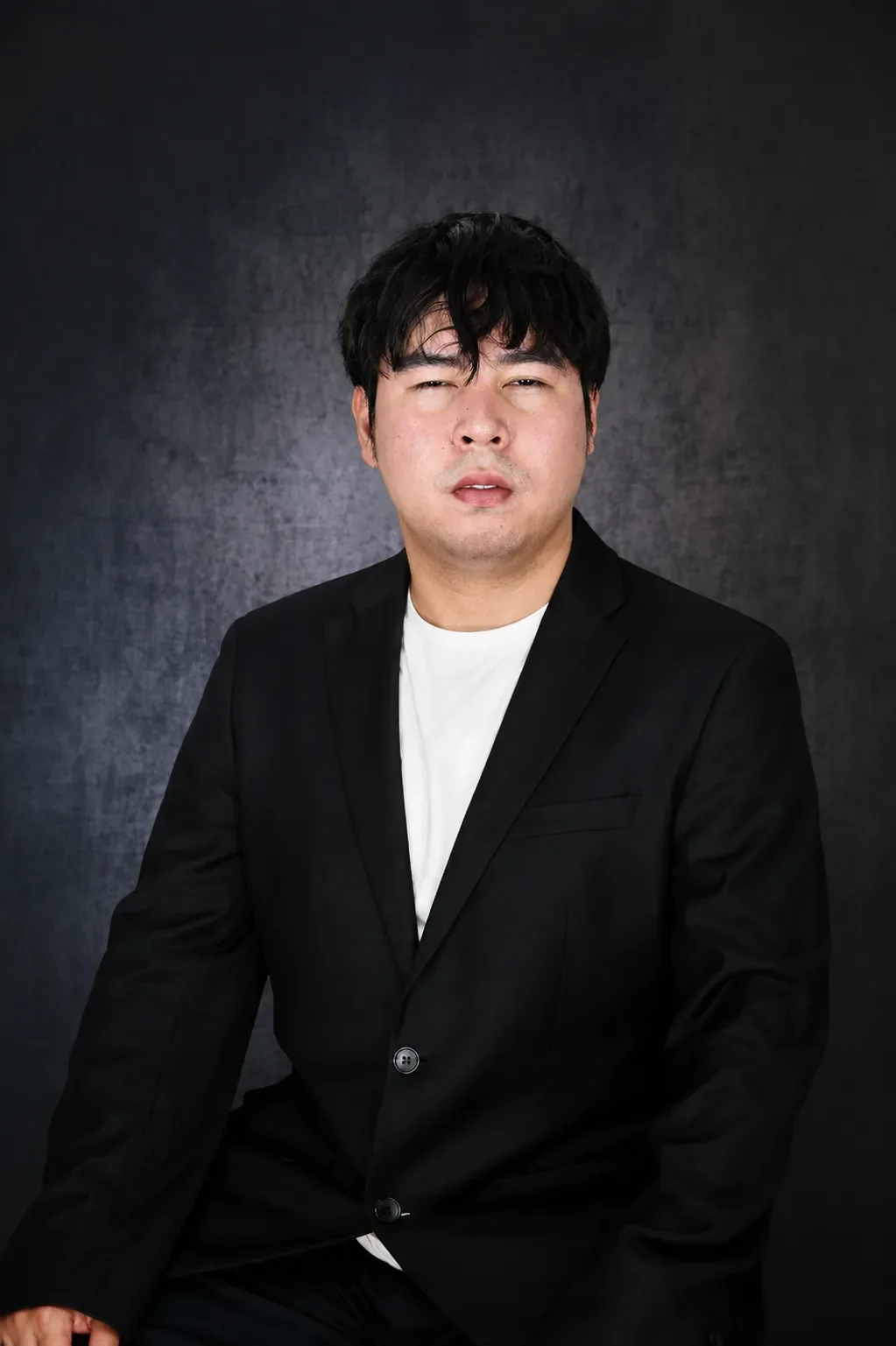
Mr. Mark Christopher Cobella
Korean Instructor
Speech Laboratory
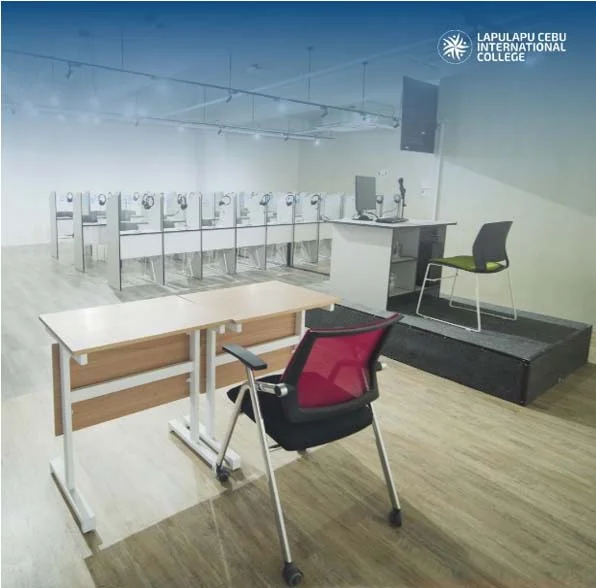
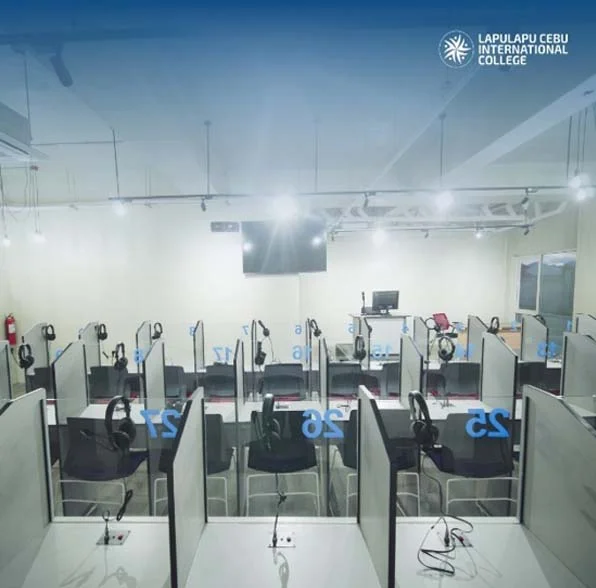
The Speech Laboratory supports students in the Bachelor of Arts in Foreign Language program, majoring in Korean and Japanese, by providing guided practice in oral communication. It is designed to develop accurate pronunciation, listening comprehension, and spoken fluency through structured language activities and interactive exercises aligned with target-language use in academic and professional contexts.