
Ready, Set, Drum! Hear Their Thrum!
May 16 to 17, 2026
When an opportunity offers an
experience seldom felt—one intense enough to alter the very rhythm of
your heartbeat—would you simply brush it aside?
The Wadaiko Team of Lapulapu-Cebu International College chose otherwise, answering the call through
unwavering dedication and countless hours of preparation as they gear up for their performance on
May 16 to 17, 2026, at the upcoming Bon Odori Festival to be held at the Puregold Open Lot, North
Reclamation Area, in Mandaue City.
With every beat echoing the spirit of passion and cultural appreciation, the team continues to
sharpen not only their performance but also the discipline and unity demanded by the art of
traditional Japanese drumming.
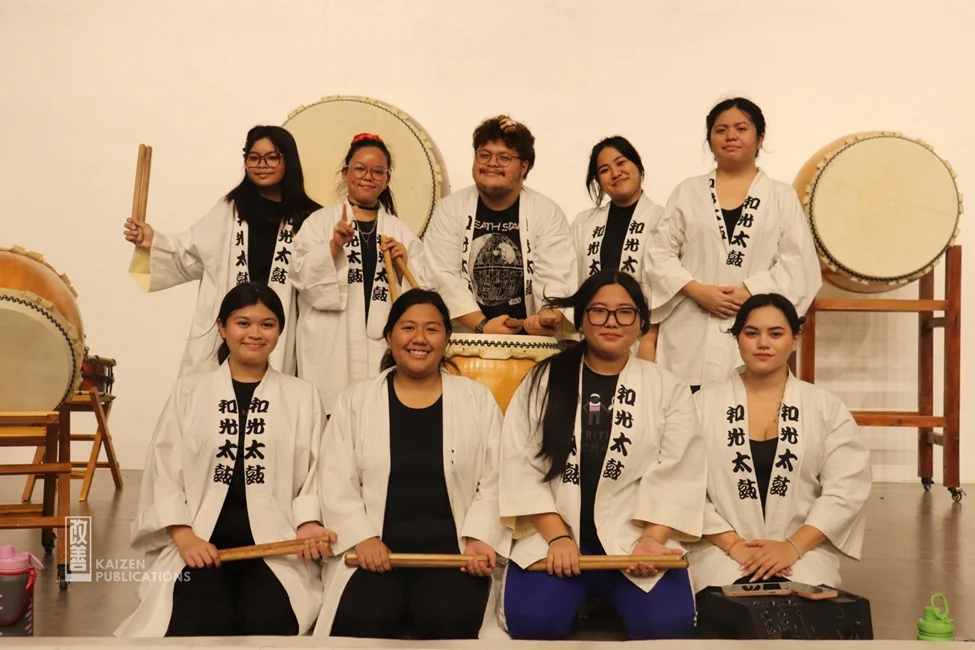
Under the guidance of their instructor, Mr. Yasuhide Tanaka, and with the assistance of Mr. Satoshi
Matsushita, the team is composed of nine members from different academic programs—three from the
Bachelor of Arts in English Language Studies and six from the Bachelor of Arts in Foreign Language.
For the organizers and mentors behind the performance, the event carries a deeper purpose beyond
entertainment alone.
“I want the Filipino students to have an experience with the Japanese festival,” said Mr. Matsushita
when asked about the purpose of joining the event. He further explained that exposing students to
Japanese traditions allows them to gain firsthand cultural experiences that may someday help them
feel more familiar and connected should they visit Japan in the future.
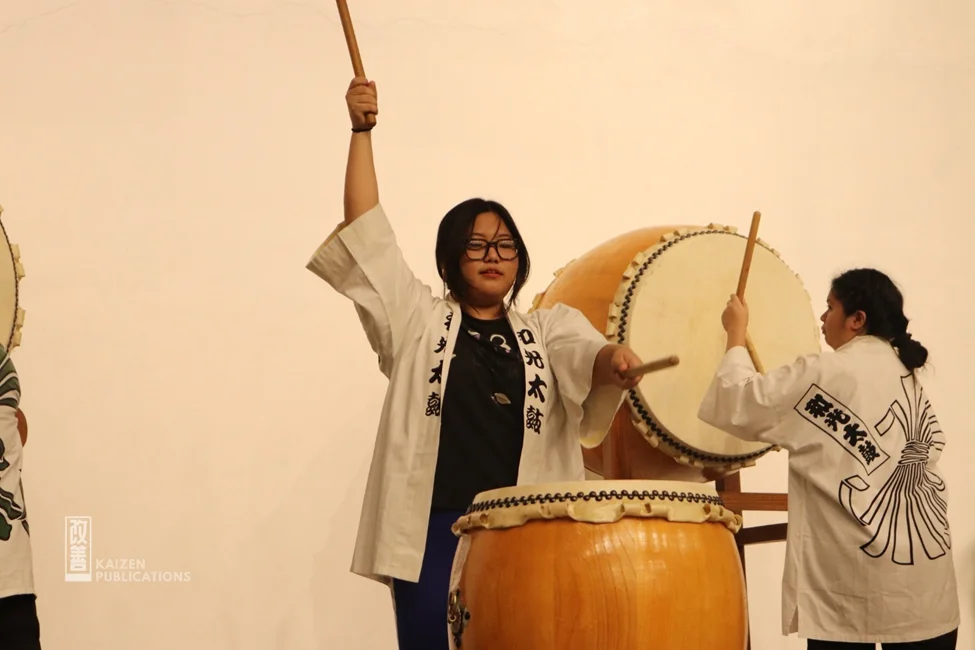
Rooted deeply in Japanese culture, Wadaiko is a powerful traditional drumming performance known for
its synchronized movements, commanding energy, and thunderous rhythms played on large taiko drums.
More than music, it is an expression of discipline, teamwork, and spirit brought together through
every resonating beat.
Behind the powerful sounds that audiences will soon witness lies months of preparation and
persistence from the team.
The Wadaiko Team began preparing in March, working within a limited schedule of only two practice
days per month. Despite the constraints, the members remained committed to mastering the rhythm,
coordination, and discipline required in traditional Japanese drumming.
“Due to his busy schedule, Tanaka-sensei can only give two days per month to teach us,” shared Lyza
Vergara, the team’s leader. “While twice a month is the scheduled training with Tanaka-sensei, our
team has been practicing diligently during the past few weeks during our free time,” she added.
For Vergara, however, joining the team was not merely about participating in another school
activity; it was a continuation of a memorable experience she first encountered during her Japanese
Language Training in Japan the previous year.
“I had a short experience playing the wadaiko during my Japanese Language Training in Japan last
year,” she shared. “That experience made me discover the fun of Wadaiko, so when I learned that LCIC
was looking for students who wanted to join the Wadaiko Squad for Bon Odori, I immediately applied.”
Aside from the rigorous training sessions and synchronized performances, the experience also became
an opportunity for students from different departments to build unexpected friendships and
connections.
“Our team is very easygoing,” Vergara said with a laugh. “Initially, I thought we might have awkward
practice sessions since we came from different departments, but it turned out better than I
expected. We were kinda shy at first, but gradually, we became quite close to each other.”
Still, learning the art of Wadaiko was far from easy.
“Wadaiko is much harder than I expected it to be,” Vergara admitted. According to her, mastering the
performance requires more than simply memorizing beats. Members must learn to internalize rhythm not
only through the mind, but also through the body and voice itself.
Before even striking the drums, the team was first taught to familiarize themselves with chants
associated with specific sounds and rhythms. Strong beats are expressed through chants such as “Do,”
“Don,” and “Doro,” while softer rhythms are represented by “Suku,” “Tsuku,” and “Toko.” Meanwhile,
sounds like “Ka” and “Kara” are used when tapping the circular edges of the drums.
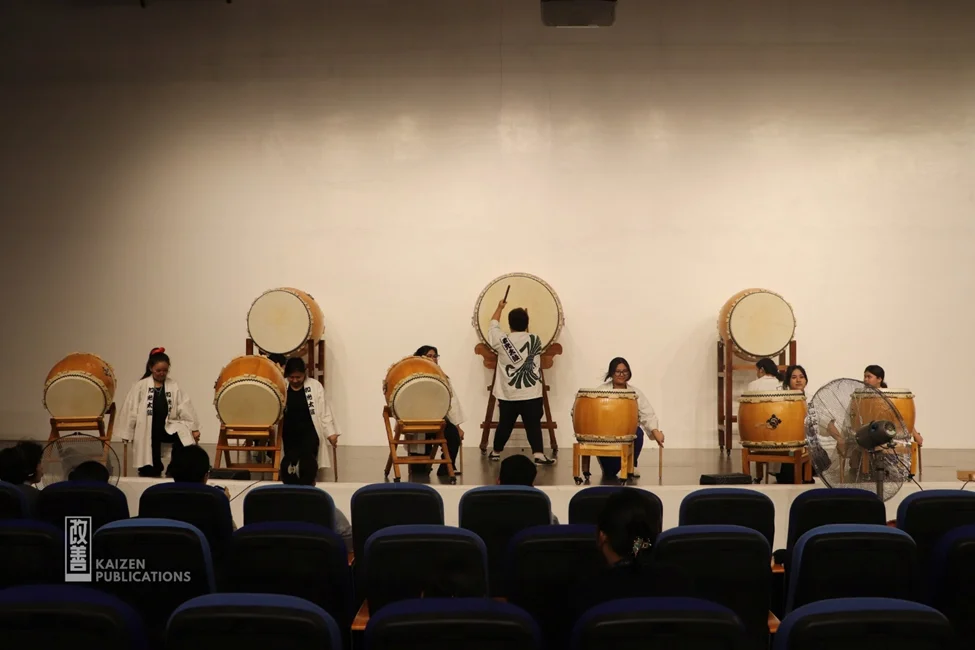
Inside the Tsuneishi Hall, the echoes of synchronized chanting often filled the room as members
repeatedly matched their movements with every beat.
“SORE! SORE! SORE! SORE!”
The team shouted in unison while rehearsing their performance, their voices blending with the
thunderous
rhythm of the taiko drums.
For Carlyle Ocado, one of the team members, the training was both exhausting and fulfilling. “Puypoy
jud
kaayo siya pero lingaw!” she shared, describing the physically demanding yet enjoyable practices.
She
also admitted that learning Wadaiko as a beginner was not easy and required intense focus during
rehearsals.
Despite the challenges, moments of improvement made the experience worthwhile for the team.
“Nindot kaayo siya sa feeling if masakto jud nimo ang beat,” Ocado said. “Malipay jud mi.”
Apart from the discipline and demanding practices, the members also found themselves deeply immersed
in the culture surrounding the performance. From receiving hantens—traditional robes worn by Wadaiko
performers—to sharing meals together after practice sessions, the experience became more than
preparation for a festival; it became a cultural exchange built through rhythm, laughter, and shared
experiences.
As the Bon Odori Festival draws near, excitement and nervousness continue to build among the
members, especially for Vergara, who carries the responsibility of leading the team despite being a
beginner herself.
“I am excited to perform in front of many people while representing not just LCIC but also Filipinos
in this Japan-Philippines collaboration project,” she shared. “Yet I also feel nervous and pressured
as the event gets closer.”
Despite the pressure, Vergara chooses to hold onto the lesson she learned throughout the journey:
“結果より大切なのは、挑戦したこと.”
What matters more than the result is having challenged yourself.
And perhaps, much like the resounding thrum of the taiko itself, the experience was never solely
about perfect rhythm or flawless performance, but about finding the courage to let one’s heartbeat
be heard.
#Kaizen2026
#GritandExcellence
#LCIC
#Feature